
How waste wool and graphene oxide make a tougher enzyme
Xiamen researchers wrap an extremophile enzyme in wool keratin and graphene oxide, boosting activity 1.42× and solvent tolerance. Promising, but reuse and scale are not yet industrial.
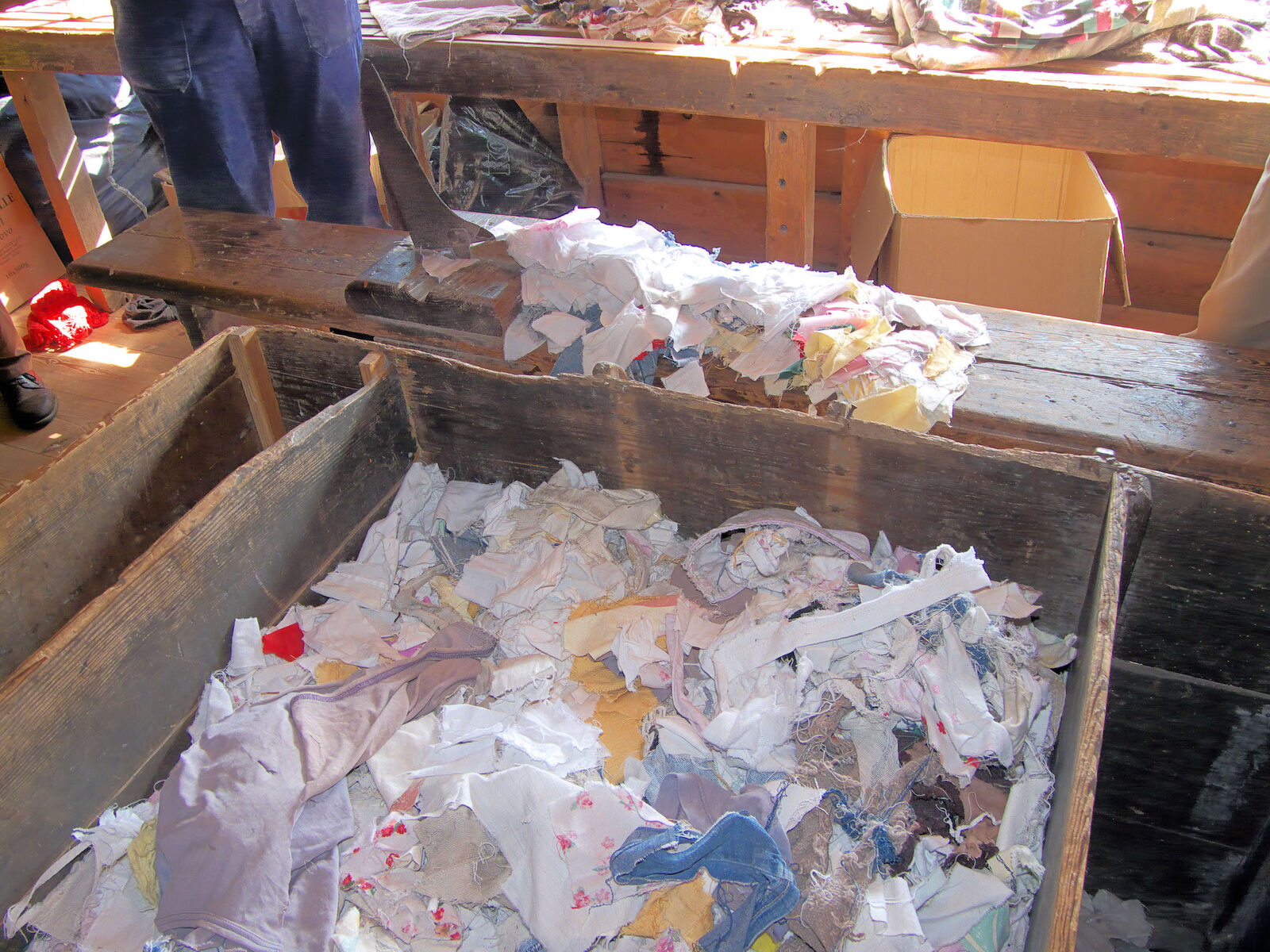
The textile industry throws away large amounts of wool, mostly to landfill. Wool is almost entirely keratin, a protein with plenty of chemically active groups. A team led by Shizhen Wang at Xiamen University used that keratin, plus graphene oxide, to build a support that makes an industrial enzyme work better and survive harsher conditions.
The enzyme
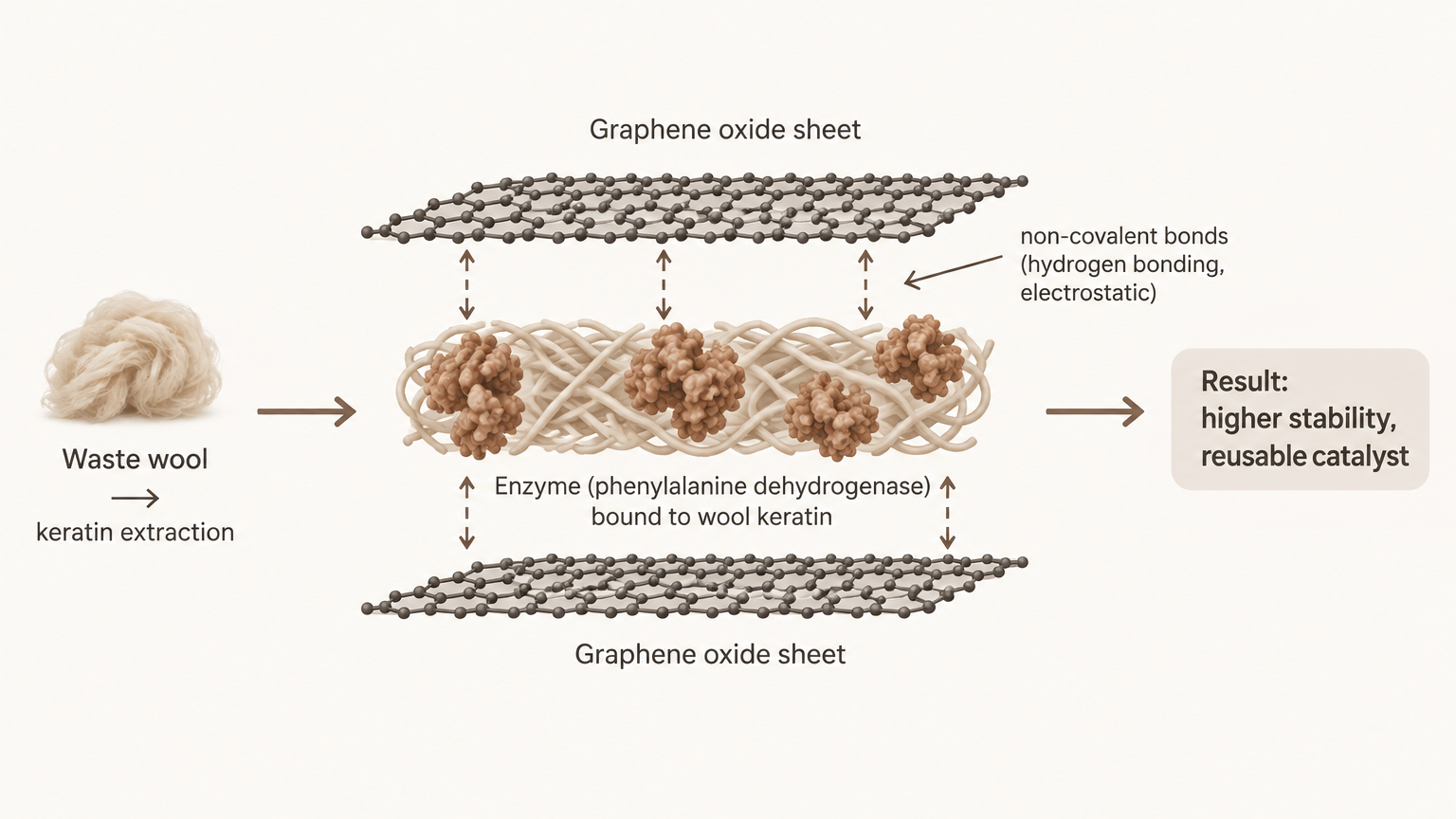
The enzyme is phenylalanine dehydrogenase from Natranaerobius thermophilus, a microbe that tolerates heat, salt and alkalinity. It converts a keto-acid ester into L-homophenylalanine, an unnatural amino acid used as a building block for pharmaceuticals.
How the material is made
- Dissolve the wool into keratin using sodium sulfide, urea and a detergent (SDS).
- Mix the purified enzyme into the keratin solution.
- Add graphene oxide sheets and stir at low temperature.
- Let it assemble. The parts stack themselves into layers — graphene oxide, then keratin-wrapped enzyme, then graphene oxide — held by hydrogen bonds, electrostatic and hydrophobic attraction, and π–π stacking.
- Lock the enzyme in shape. Keratin's amino, carboxyl and sulfhydryl groups grip the enzyme at many points without chemically altering it, keep water around it so it stays folded, and buffer the local pH.
The numbers
- Activity: 1.42× the free enzyme (6.36 vs 4.48 U/mg)
- Reuse: 73.5% activity kept after 5 cycles
- At 70°C, pH 9, 2.5 h: 69.4% kept (free enzyme: 46.1%); half-life 4.7 h
- At pH 11: 57.1% kept (free: 34.8%)
- In 30% cyclohexane: 130.6% activity (free: 48.6%)
- Catalytic efficiency (kcat/Km): 2.72 → 3.32 mM⁻¹·s⁻¹
The promise
Waste wool becomes an enzyme carrier, a job usually done by expensive engineered supports. Most enzymes fail in organic solvents; this one does better, because the keratin shields it while the solvent helps dissolve the substrate. That could support greener drug synthesis that replaces metal catalysts.
The catch
- Lab scale. No reactor scale, production yield or cost analysis.
- Reuse is modest. Commercial immobilised enzymes often aim for more than 90% activity after 10+ cycles; this is 73.5% after 5.
- Slower access. The apparent Km rises after immobilisation — the layers make it harder for substrate to reach the enzyme, offsetting part of the gain.
- No storage data. Shelf stability isn't reported.
- Not chemical-free. Dissolving wool uses sodium sulfide and urea, which have their own footprint.
- Niche market. L-homophenylalanine is a specialist intermediate; the economics depend on that one product being valuable enough.
Sources
- Bioengineer.org — Waste Wool and Graphene Oxide Combine to Supercharge an Extremophile Enzyme
- Blue Biotechnology — Hybrid soft biomaterial of wool keratin and graphene oxide (DOI 10.1186/s44315-025-00049-3)
Could waste wool become a valuable industrial material?
References and image credits›
Photo: Rasbak, CC BY-SA 3.0, via Wikimedia Commons · Diagram: The Waste Stack · Photo: Habin Zhang, Wikimedia Commons, CC BY-SA 4.0