
800,000 Tons of Recyclable Film and Not Enough Buyers
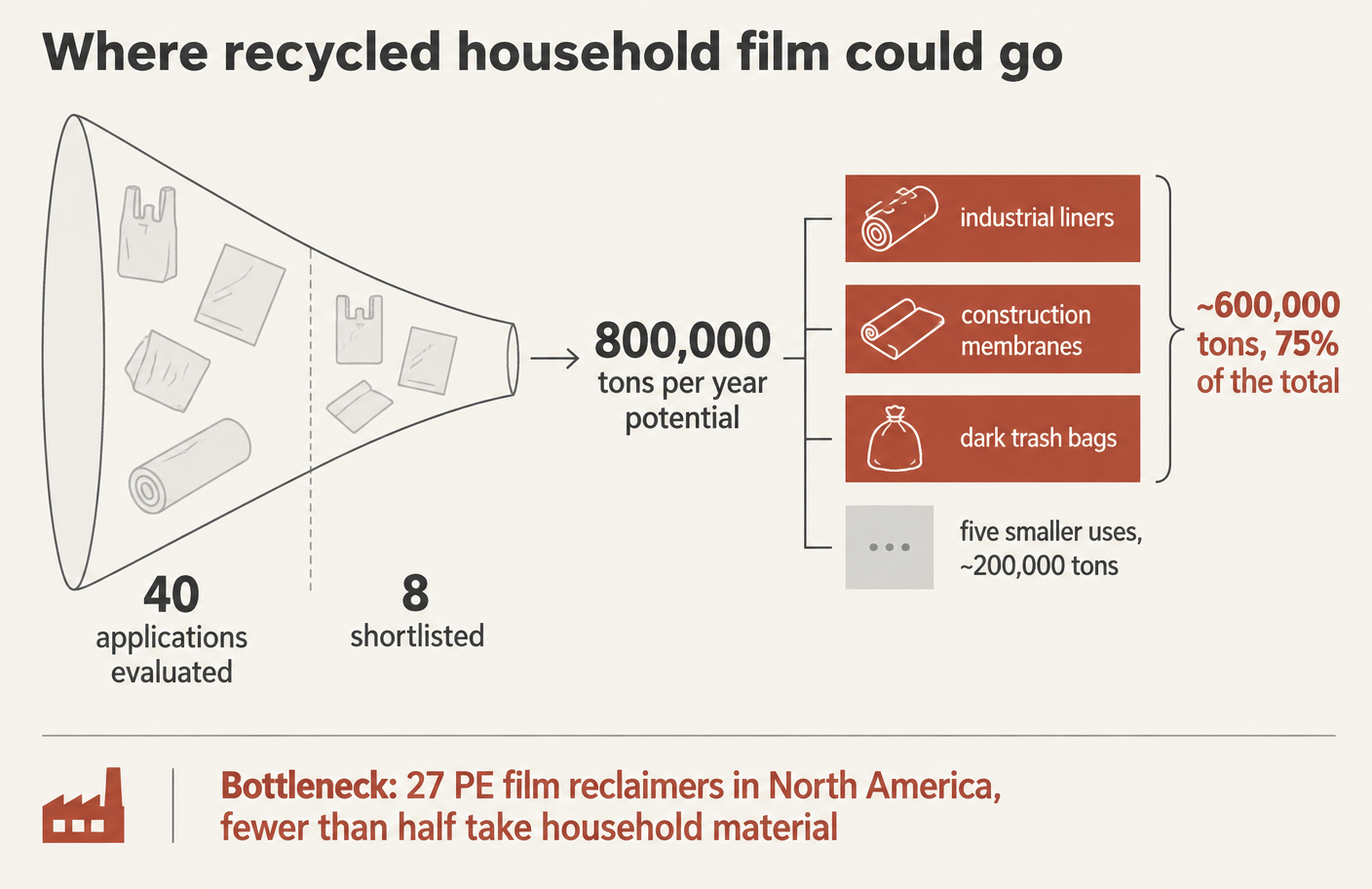
The US generates roughly 800,000 tons of recoverable polyethylene film a year. Twenty-seven reclaimers can process it, and fewer than half will take household film.
Plastic film is the stream everyone knows is a problem and most people misdiagnose. The usual story is that film cannot be recycled. The more accurate story, according to work by Eunomia and Delterra, is that film is recyclable and nobody wants enough of it.
Why household film is the hard half
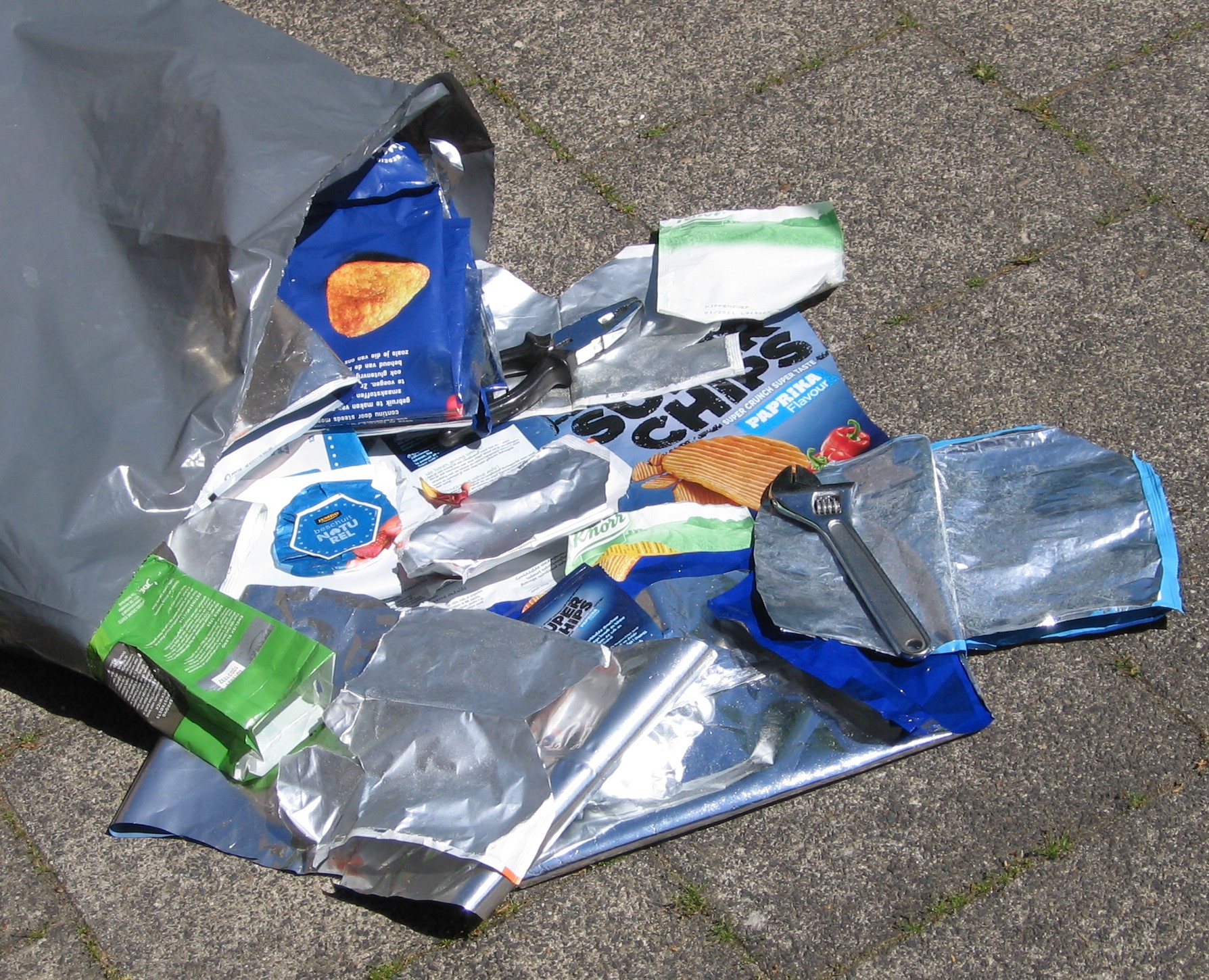
Commercial film - stretch wrap off a pallet, shrink film from a distribution centre - is clean, uniform, single-resin and available in bulk from one loading bay. Household film is none of those things. It arrives mixed LDPE and LLDPE, with food residue, labels, paper stickers and the occasional multilayer pouch that ruins a melt.
A reclaimer buying feedstock is buying predictability. Given a choice between one clean commercial source and a mixed household stream requiring extra washing and sorting, the commercial source wins on cost every time - so it does, consistently.
The end market is the constraint
Recovered PE film goes mostly into composite lumber, new film for non-food applications and refuse sacks. Those markets are real but finite, and recycled film competes against virgin PE whose price tracks natural gas. When resin is cheap, recycled film loses.
What would change the picture
Recycled-content mandates that create obligated demand, and packaging design that stops mixing PE film with barrier layers it cannot be separated from. Both are policy and design levers, not sorting-technology levers. Building more collection into a market with 27 buyers does not create a 28th.
The caveat
Figures are US-specific and drawn from a single study; definitions of recoverable vary and other analyses put the generation figure higher. The structural point - that demand, not technical recyclability, is the binding constraint - holds across most of the published work on film.
References and image credits›
Photo: Wikimedia Commons, CC BY-SA 4.0 · Photo: Wikimedia Commons, CC BY-SA · Photo: via Wikimedia Commons