
Is Turning Plastic Into Hydrogen Actually Recycling?
The chemistry is real. The label is doing a lot of work. If the outputs are hydrogen gas and mineral carbonate, no plastic has been recycled — something else has happened.
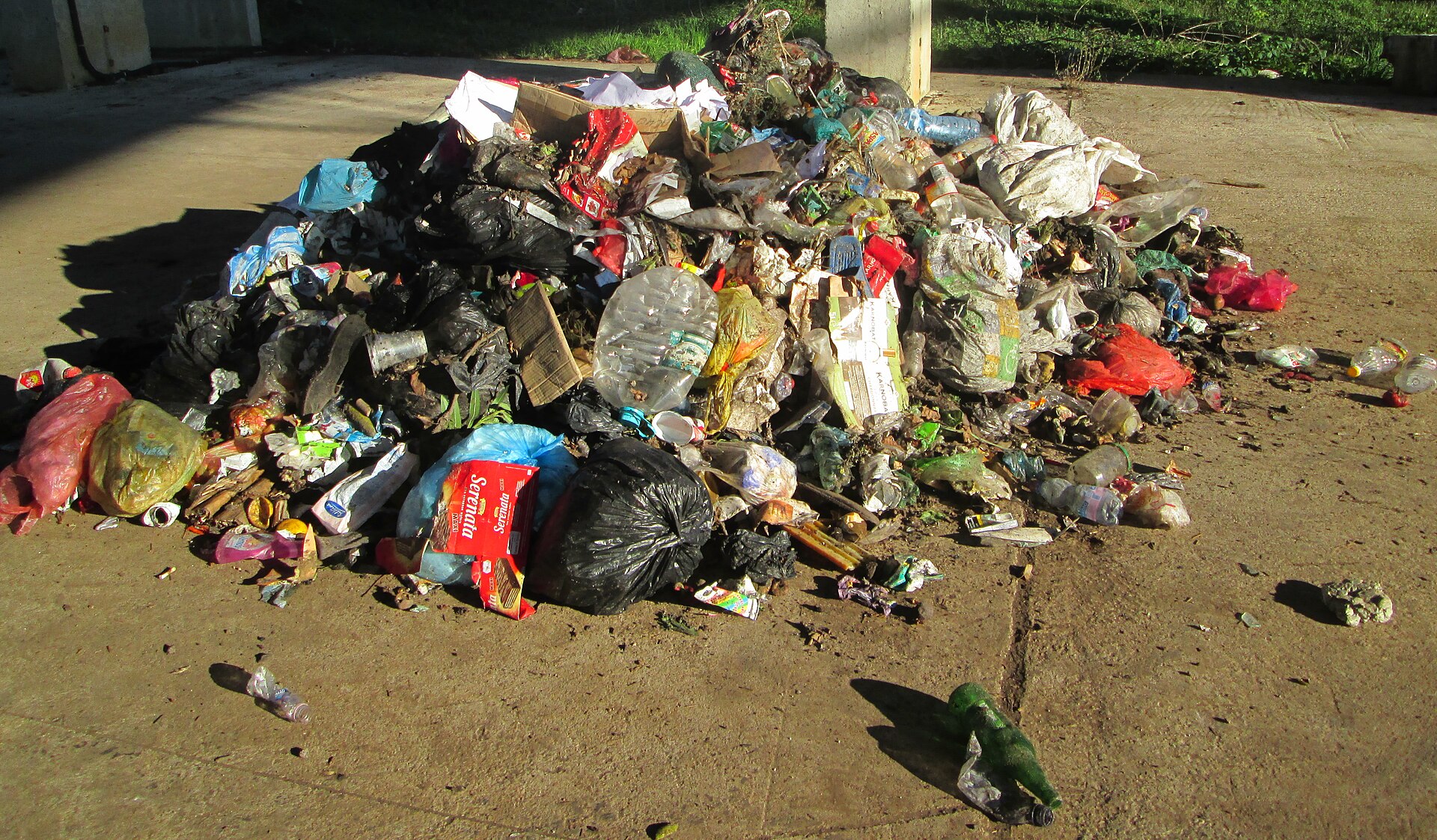
A process that consumes mixed plastic waste and produces hydrogen is a genuinely useful thing. Whether it belongs under the word "recycling" is a separate question, and the answer changes who gets to claim credit for it.
The framing being sold
This is plastic recycling — waste plastic goes in, so the plastic is being recycled.
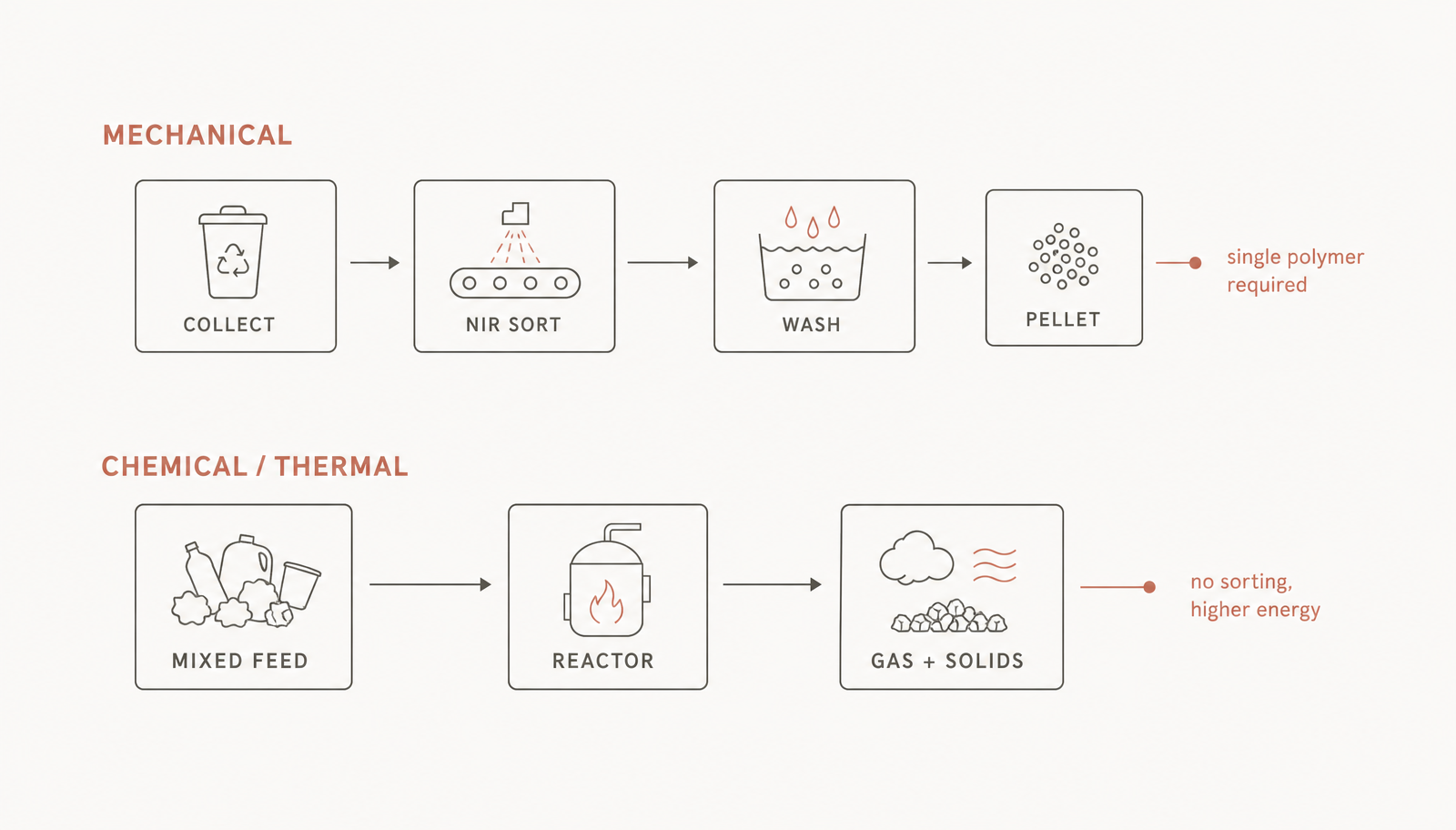
Nothing plastic comes out. The polymer is destroyed. The outputs are hydrogen gas and solid carbonate. Under the standard material-recovery definition, no plastic has been recycled; a waste stream has been converted into an energy carrier and a mineral.
On circularity
It closes the loop on packaging waste.
A loop returns material to its original function. This is a one-way conversion. The carbon that used to be a bottle is now carbonate and is not coming back as a bottle. That may be the better outcome for contaminated mixed waste — but it is a terminal pathway, not a circular one.
On the carbon claim
It is carbon-negative because more than 75% of the carbon is locked in stable form.
The retained carbon is fossil carbon that was already sequestered as plastic. Storing it as carbonate prevents a future emission relative to incineration; it does not remove atmospheric carbon. And the sodium hydroxide has its own production footprint, which the paper's simplified LCA does not fully resolve.
On readiness
A new route to clean hydrogen from waste.
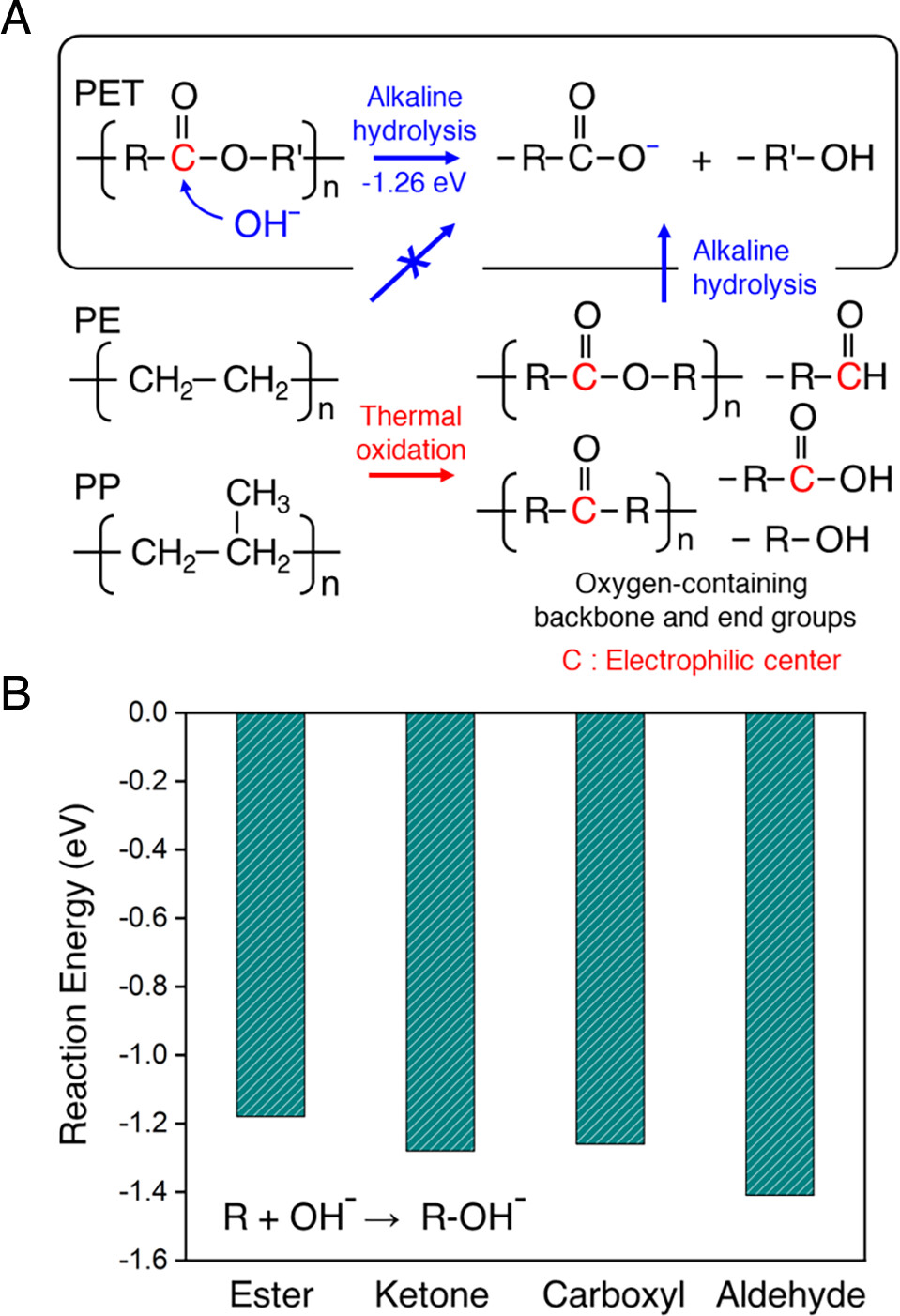
A lab reactor with pretreated feedstock. PE and PP need a thermal-oxidation step, real waste carries fillers that lab samples do not, and the alkali must be managed or regenerated for the economics to work at all.
The honest label
Calling it what it is matters for policy: recycling targets, extended producer responsibility credits and carbon accounting all key off definitions. If destruction-with-storage counts as recycling, the target stops measuring what it was written to measure.
References and image credits›
- 01ScienceDaily — Turning mixed plastic waste into hydrogen without sorting
- 02PNAS — Alkaline thermal treatment of mixed plastic waste for hydrogen production
Diagram: The Waste Stack · Diagram: The Waste Stack · Photo: 008all, CC BY-SA 4.0, via Wikimedia Commons · Photo: Grendelkhan, CC BY-SA 4.0, via Wikimedia Commons