
Quebec Made Blue-Bin Glass Good Enough to Become a Bottle Again
For decades half of Quebec's curbside glass was buried as landfill cover. A $20M optical-sorting upgrade finally gets it clean enough for the furnace.
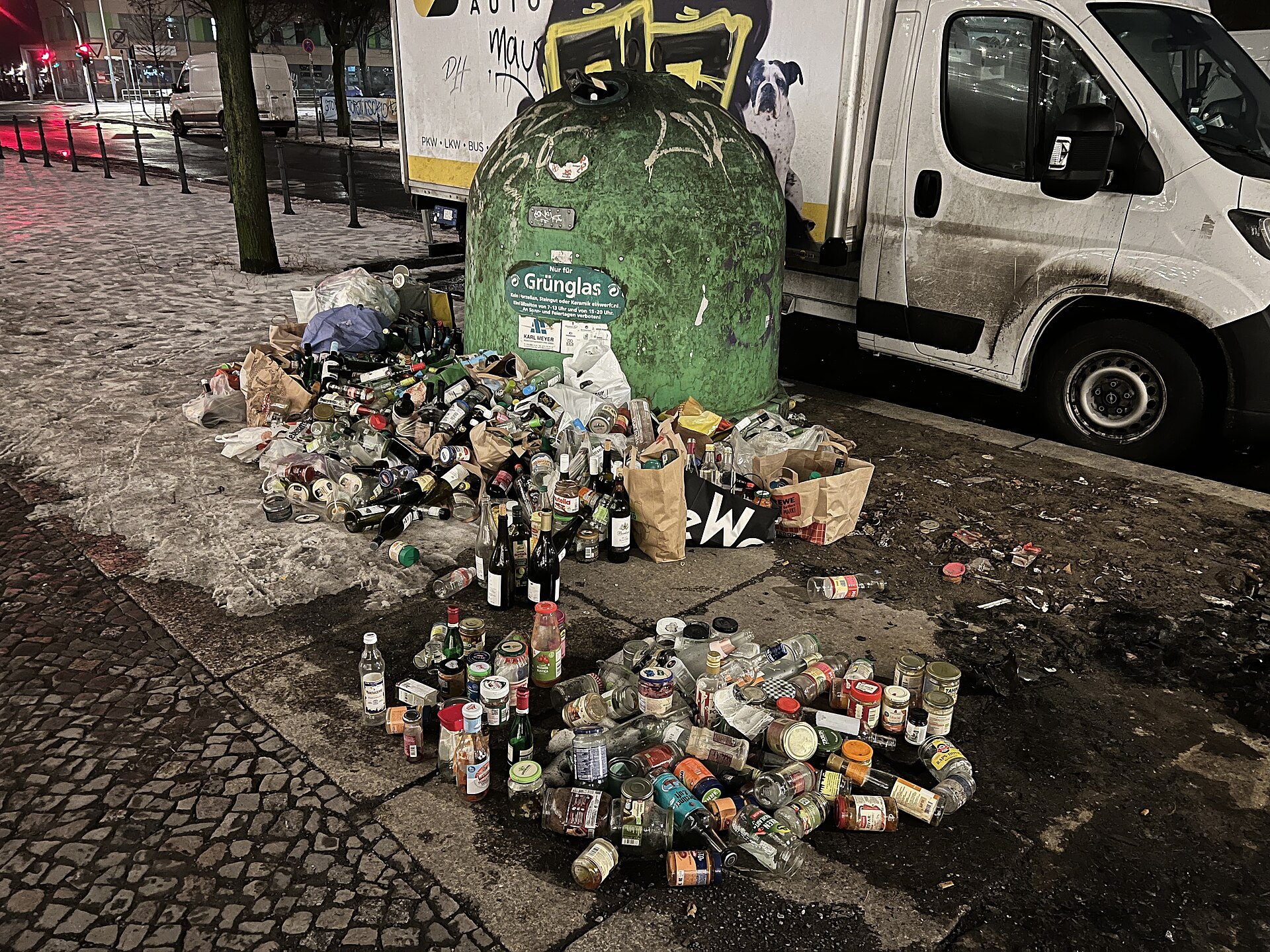
Glass has a quiet failure built into it. It is infinitely recyclable in principle, and in Quebec roughly half of what households put in the blue bin was being ground up and spread over a landfill as daily cover. Technically diverted. Functionally buried.
Why curbside glass fails the furnace
Remelting - making a new container out of old glass - is unforgiving. The furnace wants cullet that is colour-sorted, chemically predictable and essentially free of ceramics and metal. A single ceramic fragment does not melt; it becomes a stone in the finished bottle and the bottle is scrap. Mixed curbside glass arrives at roughly 80% glass content with caps, labels, ceramics and three colours jumbled together. It fails the spec before it reaches the gate.
What Bellemare changed
Groupe Bellemare, in Trois-Rivieres, has put $20M into its facility since 2019, nearly half of it specifically for remelting-grade conditioning. The core addition is optical sorting.
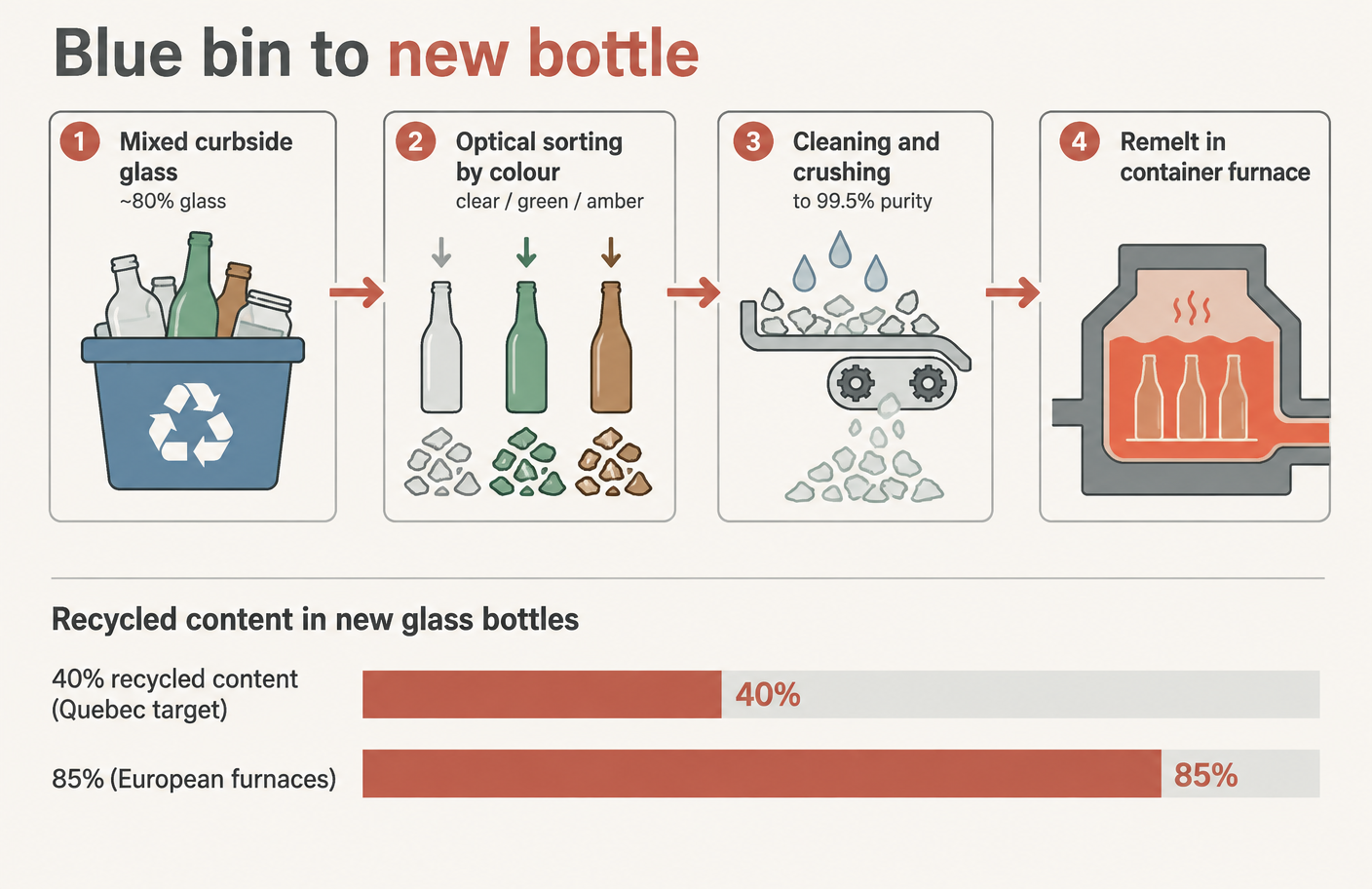
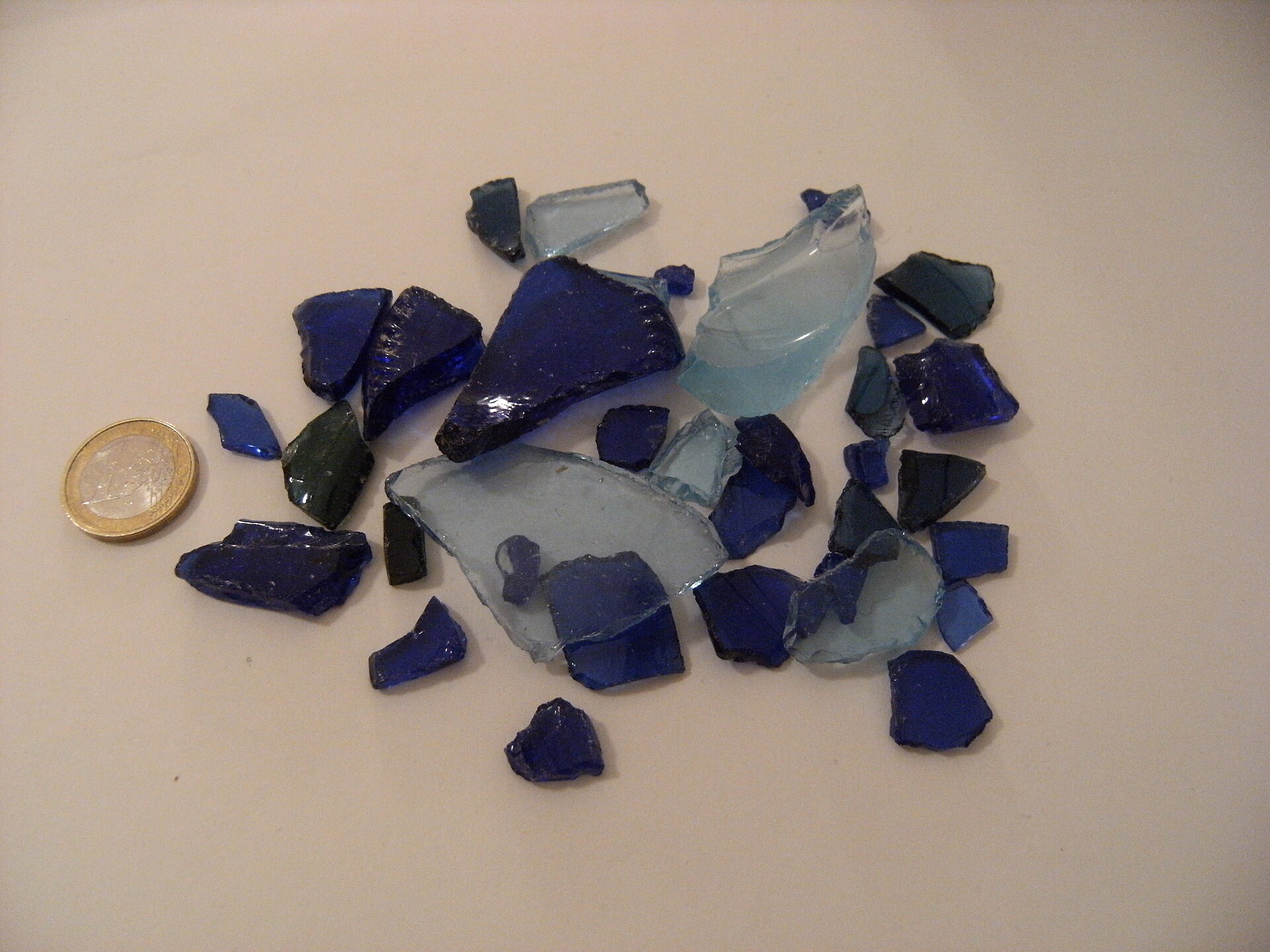
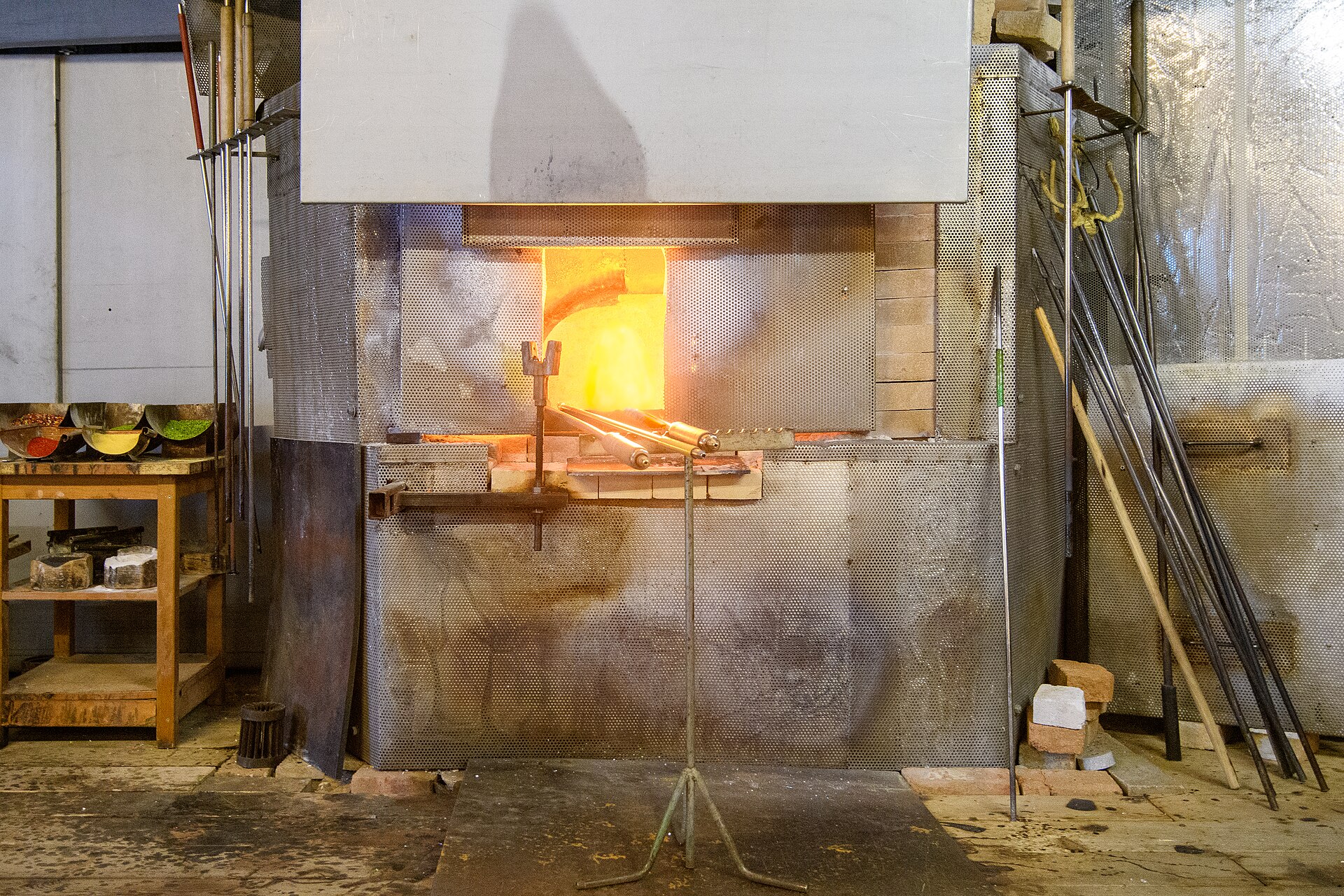
Sorters separate clear, green and amber and eject non-glass contaminants; the sorted fractions are then cleaned and crushed to around 99.5% glass. That output goes to the Owens-Illinois furnace in Montreal and comes back out as containers. Production was set to begin in September 2026.
What it actually proves
That a contaminated household stream can be upgraded to circular-grade material with sorting technology rather than with better consumer behaviour. That matters, because consumer behaviour is the variable nobody can control.
The limits worth naming
One facility, one province. Bellemare has previously had to scale back operations over noise complaints from neighbours - recycling infrastructure has siting problems like any other industrial plant. Incoming quality still depends on what residents put in the bin. And the headline target, 40% recycled content in new containers, sits well under the 85% that European furnaces routinely run.
Forty percent is a real improvement over burying the stuff. It is not a closed loop.
References and image credits›
- 01A first in Quebec: glass from the blue bin can be 100% reconditioned (Newswire)
- 02La Presse - Fini, l'enfouissement
Photo: Wikimedia Commons, CC BY-SA · Photo: Wikimedia Commons, CC BY-SA · Photo: Isiwal, Wikimedia Commons, CC BY-SA 4.0