
Sewage plants are quietly mining fertiliser out of your wastewater
Three ions that a treatment plant desperately wants gone will, under the right conditions, snap together into a crystal worth selling. The same crystal also destroys the pipes. Here is the mechanism.
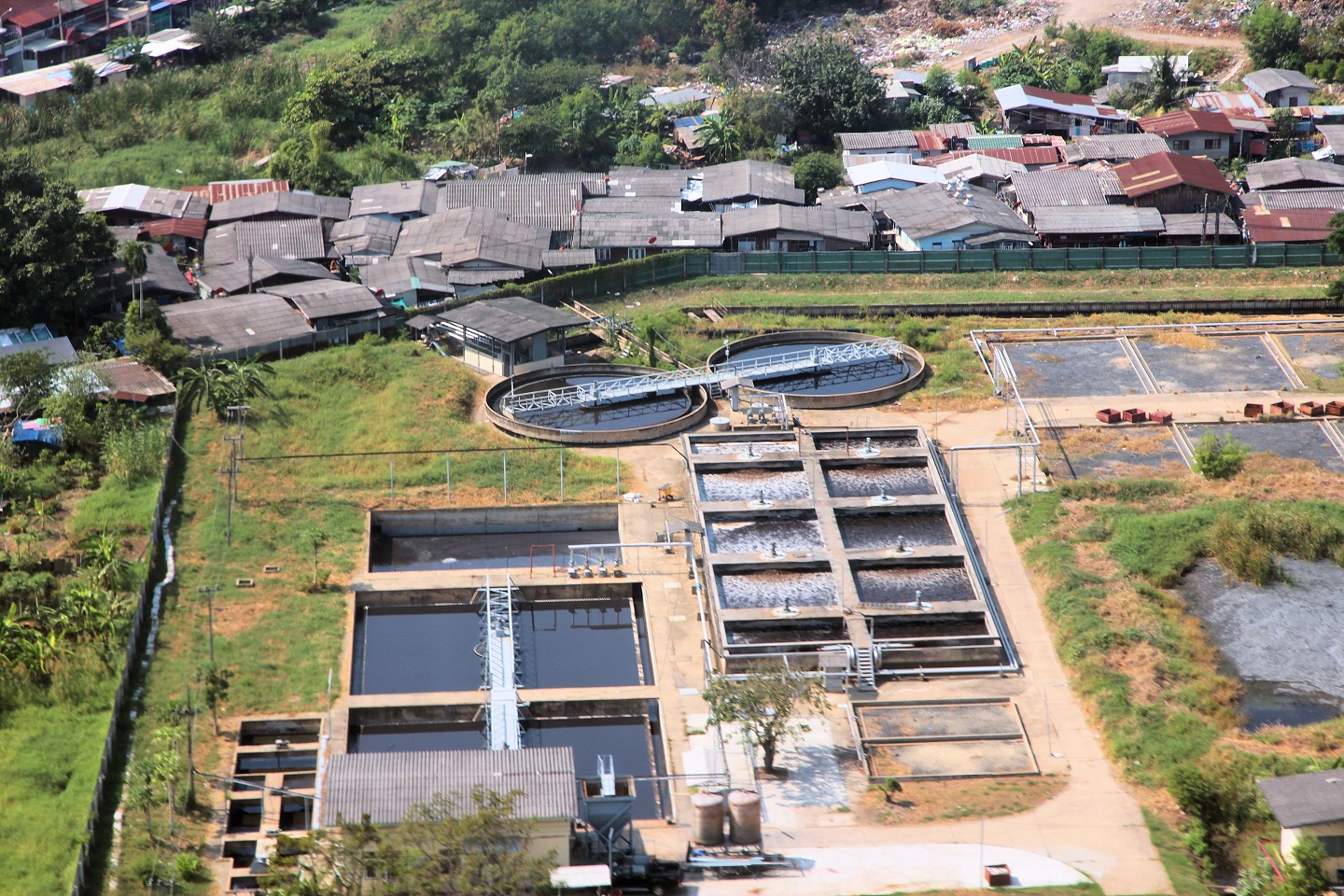
Phosphorus is finite. There is no atmospheric reservoir to draw on, no synthetic route: every gram of it in agriculture was mined out of phosphate rock somewhere, and a large share of it ends up dissolved in sewage. A wastewater plant is, in a literal sense, a phosphorus mine with the ore already in solution.
A 2026 review in Biomass went back over the recovery routes and concluded that one of them — struvite crystallisation — is the mature option: not a promising lab result, but a process already running at full scale.
Why the plant wants those ions gone anyway
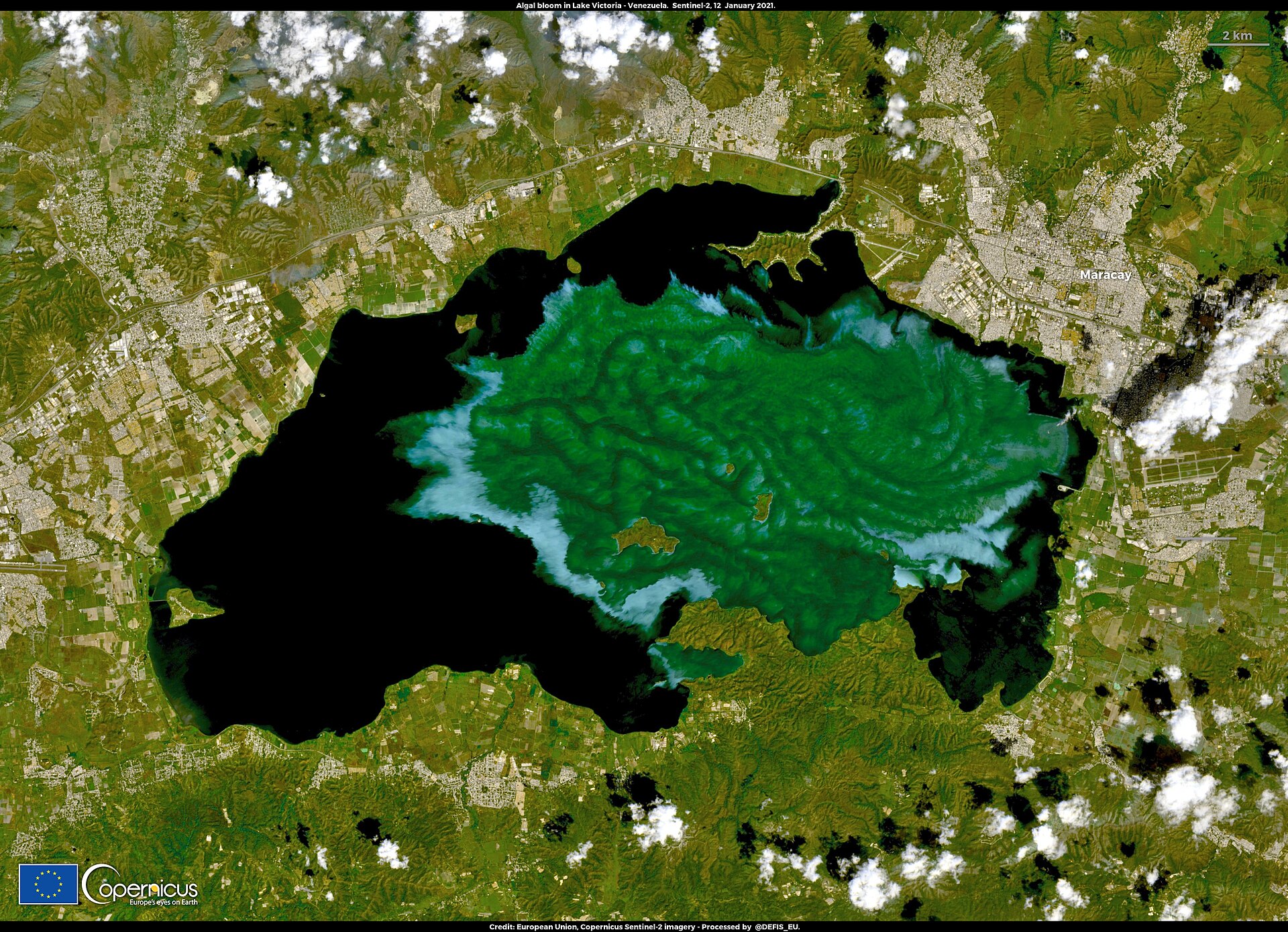
Sewage, and especially the "centrate" liquor squeezed out of anaerobic digester sludge, is loaded with phosphate (PO₄³⁻) and ammonium (NH₄⁺). Discharge them and you feed algal blooms downstream. Removing them is not optional in most jurisdictions; it is a compliance cost.
The third ion in the mix is magnesium (Mg²⁺), present in smaller amounts. Put all three together, push the liquid into a supersaturated state, and they stop being a compliance cost.
The reaction
Mg²⁺ + NH₄⁺ + PO₄³⁻ combine into magnesium ammonium phosphate hexahydrate — MgNH₄PO₄·6H₂O, known as struvite or MAP. It precipitates as hard white crystals you can filter out. One reaction removes both the phosphorus and a slice of the nitrogen.
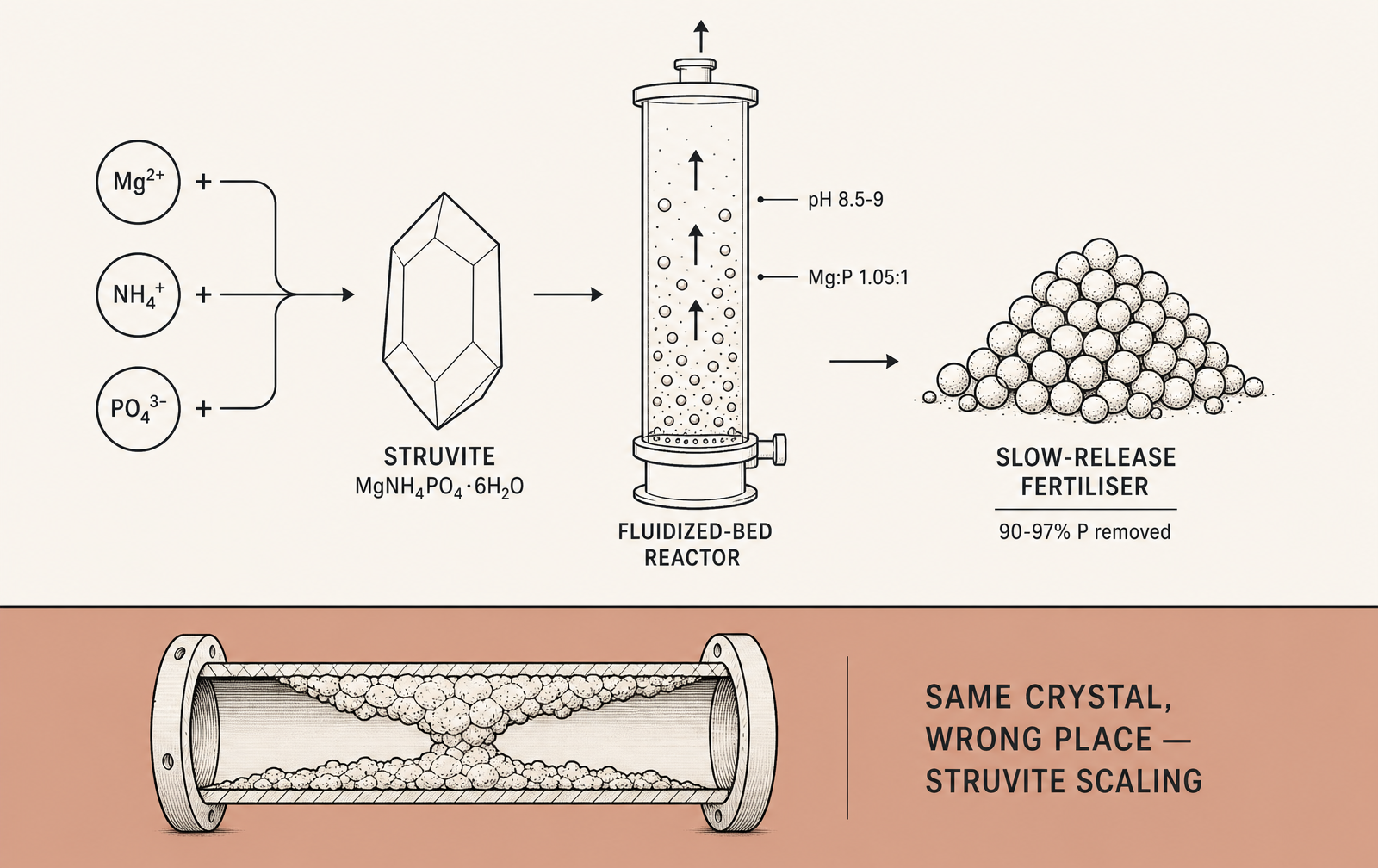
Operators do two things to force it. They raise pH into the 8.5–9 window, usually by aerating the liquid to strip out dissolved CO₂ rather than by dosing alkali. And they add a magnesium source — MgCl₂, MgO, or Mg(OH)₂ slurry — to push the Mg:P molar ratio to at least about 1.05:1.
The reactor decides what you can sell
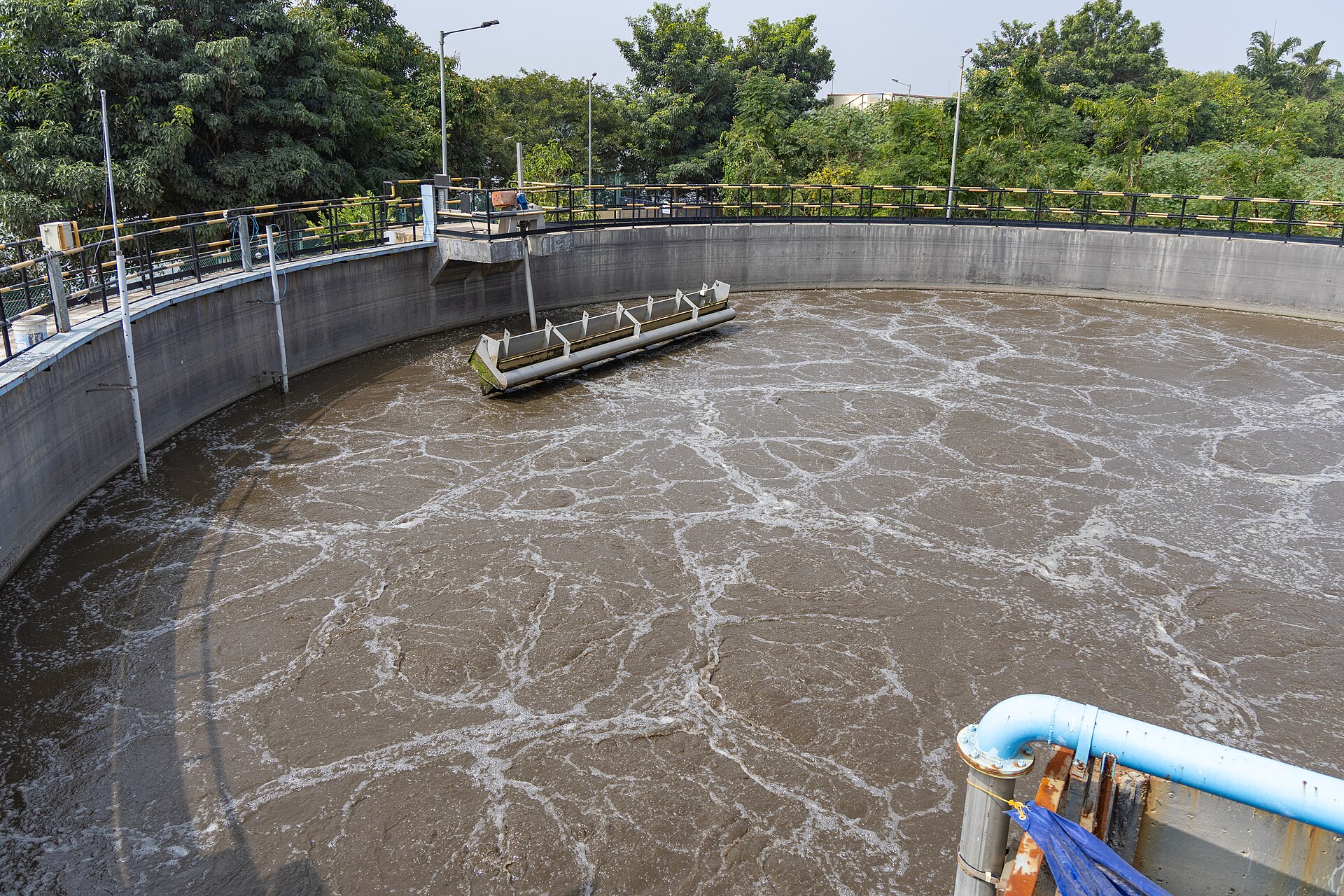
Crystals nucleate readily but grow slowly, and fine powder is miserable to handle. So the geometry matters. A fluidized-bed reactor sends flow upward through a column, holding crystals in suspension long enough to grow into pellets rather than dust. Stirred tanks and air-agitated columns do the same job with different trade-offs.
A pilot MAP reactor reported 94% orthophosphate removal at pH 8.5. A full-scale study on centrifuge liquor reached 97% P removal as struvite. Source-separated urine — the most concentrated feed available — has hit 99%.
What comes out the other end
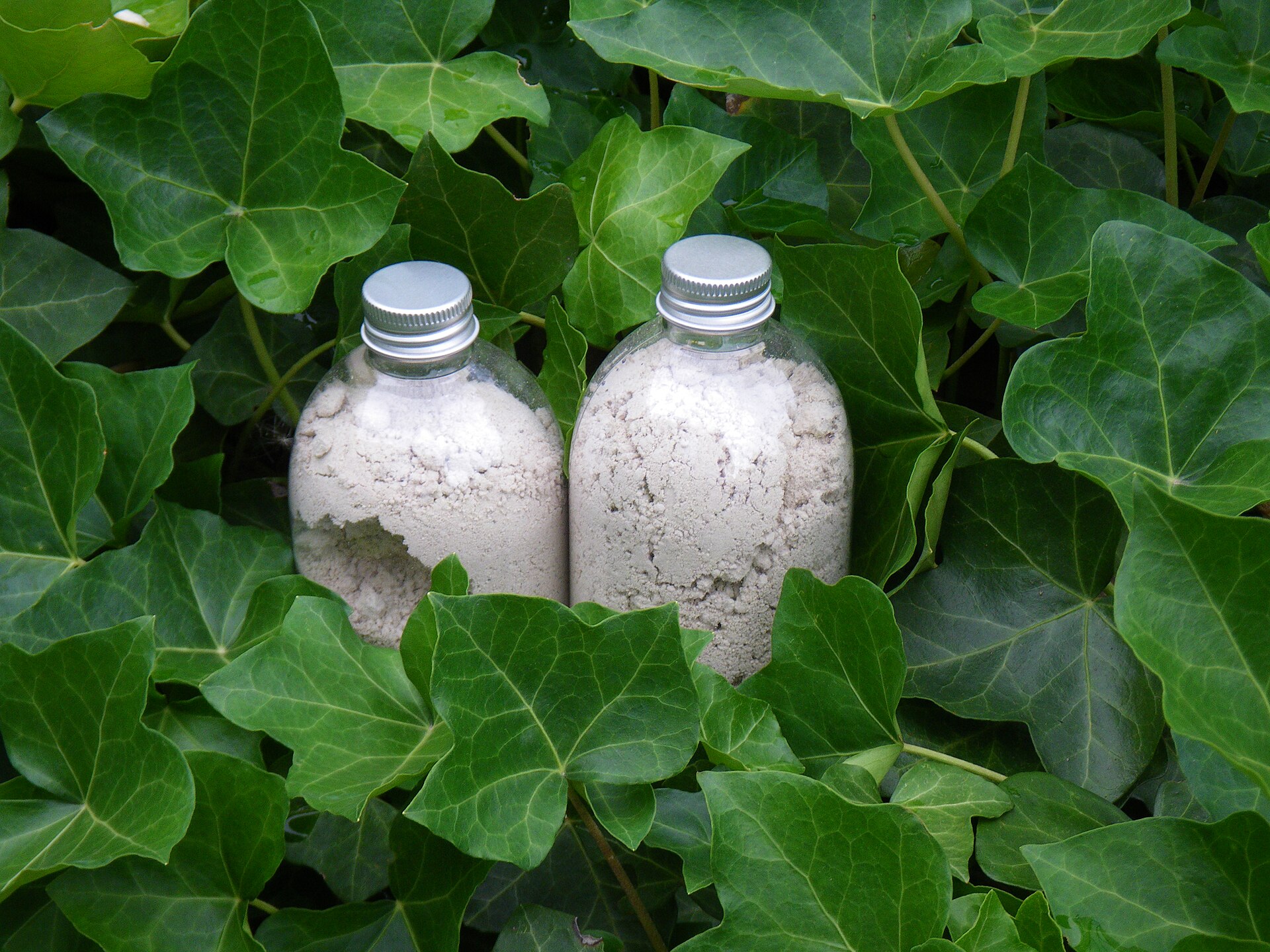
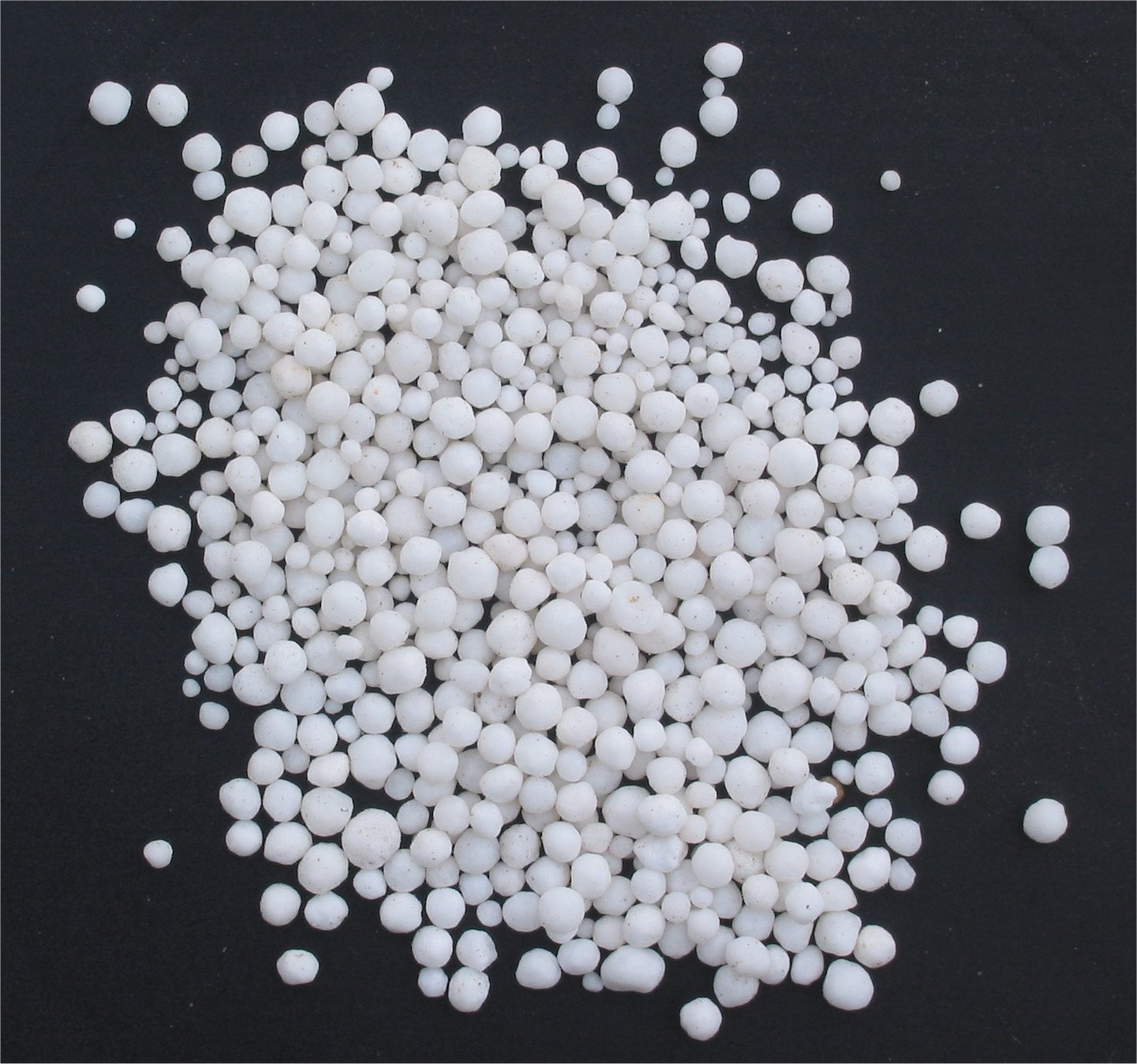
Struvite pellets are a slow-release fertiliser carrying both phosphorus and nitrogen. Because they dissolve gradually rather than flushing away, runoff risk is lower than with highly soluble mineral phosphate — a genuine advantage in coastal agriculture and for crops that do not want a soluble-P spike.
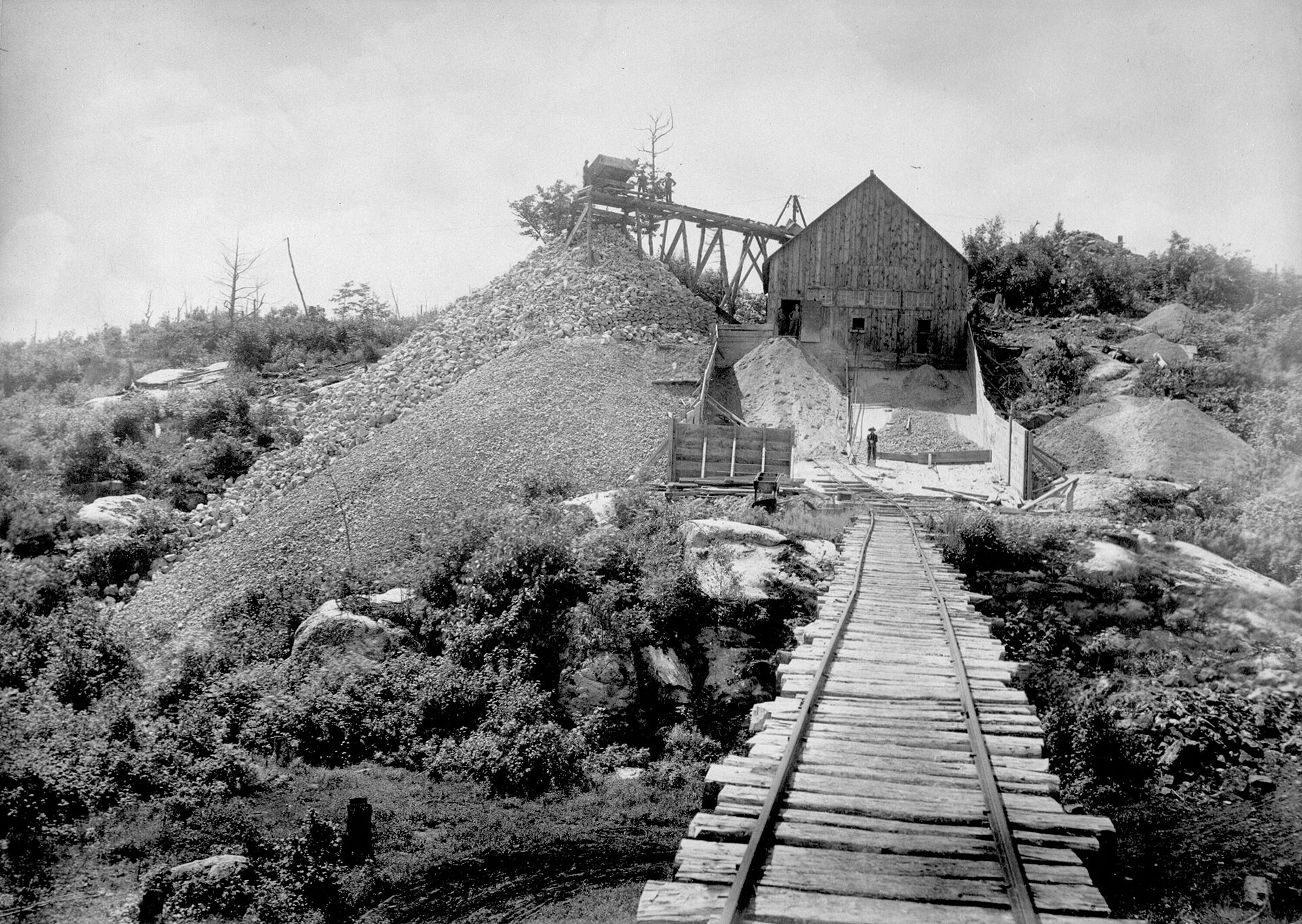
And it displaces mined rock. Phosphate mining is a heavy extractive industry with a fixed resource base, and recovered struvite is one of the few routes that shortens the loop rather than lengthening it.
The twist that makes this an engineering story
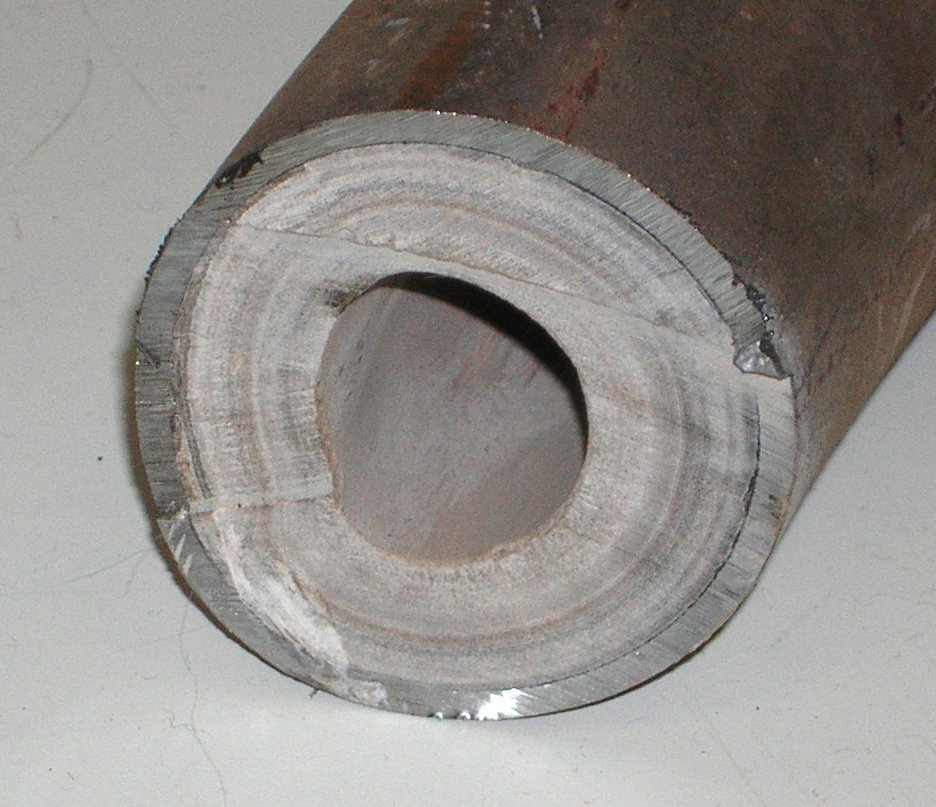
Struvite does not wait to be asked. The exact conditions that make a reactor work — supersaturation, turbulence, a pH lift where CO₂ escapes — occur naturally inside pipes, pump volutes, and heat exchangers on the sludge line. There, the same crystal is called scaling, and it is a maintenance nightmare.
The other operational headaches are chemical. Calcium competes with magnesium and forms calcium-apatite instead of struvite. Aluminium interferes. Heavy metals can coprecipitate into the product, which matters if you plan to sell it as fertiliser. And magnesium dosing plus reactor residence time is a real cost line, not a rounding error.
How to read it
Struvite recovery is not a speculative technology. It is a mature unit process with a known failure mode, a known chemistry, and a product with an existing market. What limits it is not the science but the arithmetic: whether the fertiliser revenue plus the avoided scaling maintenance plus the avoided discharge penalty adds up to more than the magnesium bill at a given plant's feed concentration.
That is the question worth asking about any plant claiming to "recover" phosphorus. Not whether the crystal forms — it will — but whether the numbers close.
References and image credits›
- 01Peeva, "Phosphorus Recovery from Wastewater in the Circular Economy: Focus on Struvite Crystallization", Biomass (MDPI), 17 Apr 2026
- 02Nadagouda et al., "Recent Advances in Technologies for Phosphate Removal and Recovery: A Review", ACS Environmental Au, 2024
- 03EU CAP Network — PHORWater: biological P-recovery and struvite scaling
Marek Ślusarczyk, Wikimedia Commons, CC BY 3.0 · European Union, Copernicus Sentinel-2 imagery, Attribution · Photo: Vraj Acharya / WELL Labs, CC BY-SA 4.0, via Wikimedia Commons · SuSanA Secretariat, Wikimedia Commons, CC BY 2.0 · Photo: Rasbak, Wikimedia Commons, CC BY-SA 3.0 · Public domain, via Wikimedia Commons · Public domain, via Wikimedia Commons