
How a single ruthenium atom could unlock lignin, the plant waste we mostly burn
Lignin is up to 35% of farm and forestry waste and almost all of it is burned for low-grade heat. A Manchester single-atom catalyst cuts both of its toughest bond types at once — here is how, and what the paper does not yet tell us.
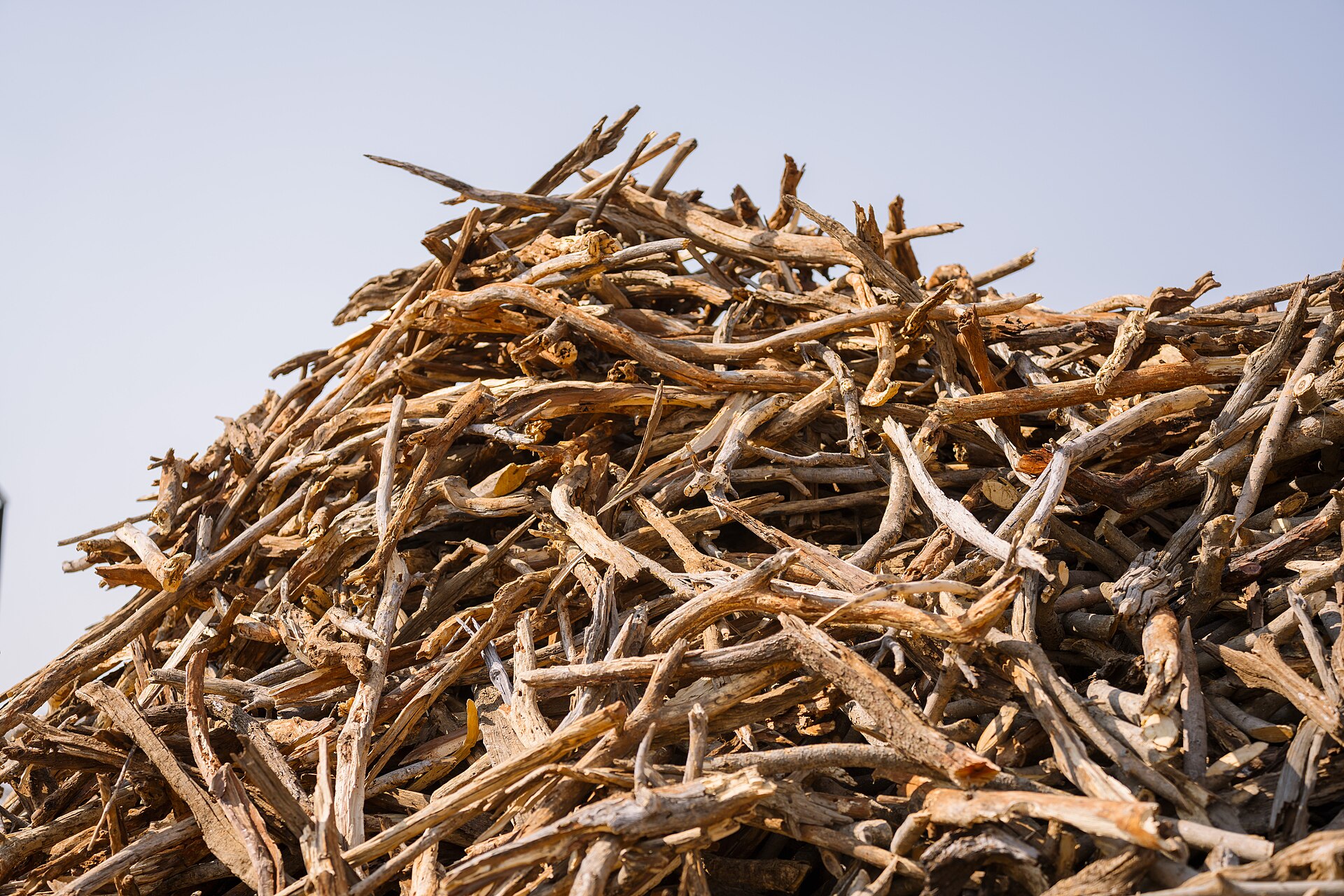
Lignin is what makes wood stiff and brown. It is the second most abundant biopolymer on Earth after cellulose and the largest renewable source of aromatic carbon — the ring-shaped molecules the chemical industry currently gets from oil. Yet in practice almost all of it ends up in a boiler at a pulp mill.
Why lignin resists everything
Lignin is not a neat chain like cellulose. It is a chaotic, cross-linked network of phenylpropanoid units held together by two kinds of bond: C–O ether links, and much stronger C–C backbone links. Most depolymerisation methods only break the ether links, which leaves a large share of the carbon locked in fragments nobody can use.
How the single-atom catalyst works
A University of Manchester team led by Christopher Parlett and Changzhi Li embedded isolated ruthenium atoms in a nitrogen-doped carbon support. Each active site is one Ru atom held by four nitrogen atoms — a "Ru-N4" site.
- Every atom works. Because the metal is dispersed atom by atom, there are no buried atoms inside a nanoparticle doing nothing. That matters for a metal as expensive as ruthenium.
- Oxygen gets activated. The Ru-N4 site activates ordinary molecular oxygen into highly reactive oxygen species.
- Both bonds get cut. Those species attack lignin and cleave both the C–O ethers and the C–C backbone in one system.
- Useful aromatics come out. The fragments include phenol, a building block for resins, plastics and fuels that today comes from petroleum.
What the paper does not tell us yet
The public release says the catalyst converted "nearly all" model compounds with "high yields". Those are qualitative words. There are no published conversion percentages, product selectivity numbers, catalyst lifetime or recyclability data, energy use or life-cycle assessment in the material released so far.
Real lignin is also far messier than model compounds, and it varies by plant species and by the pulping process that extracted it. Ruthenium is rare, and even at single-atom loadings the cost of losing it over many cycles could decide the economics.
The honest read
This is a genuine chemistry advance with a clear reason to exist: we burn a feedstock that could replace petroleum aromatics. It is not yet a process. The next numbers to watch are yield per tonne of real lignin and how many cycles the catalyst survives.
References and image credits›
- 01ScienceDaily — Atomic catalyst unlocks the hidden value of plant waste
- 02ACS Catalysis — Role of Ru-N4 on Ru-N-C single-atom catalyst in lignin C-O/C-C cleavage
Photo: Work With Sounds, CC BY-SA 4.0, via Wikimedia Commons · Photo: Miha Bukleski, CC BY 4.0