
$8.4 billion in rare earths in coal ash? What WPI's bio-inspired project has actually shown
A $3.3M NSF grant will study how diatoms and sponges handle silica to pull rare earths out of coal ash. The headline number is real content, not recoverable metal — and the project has no results yet.
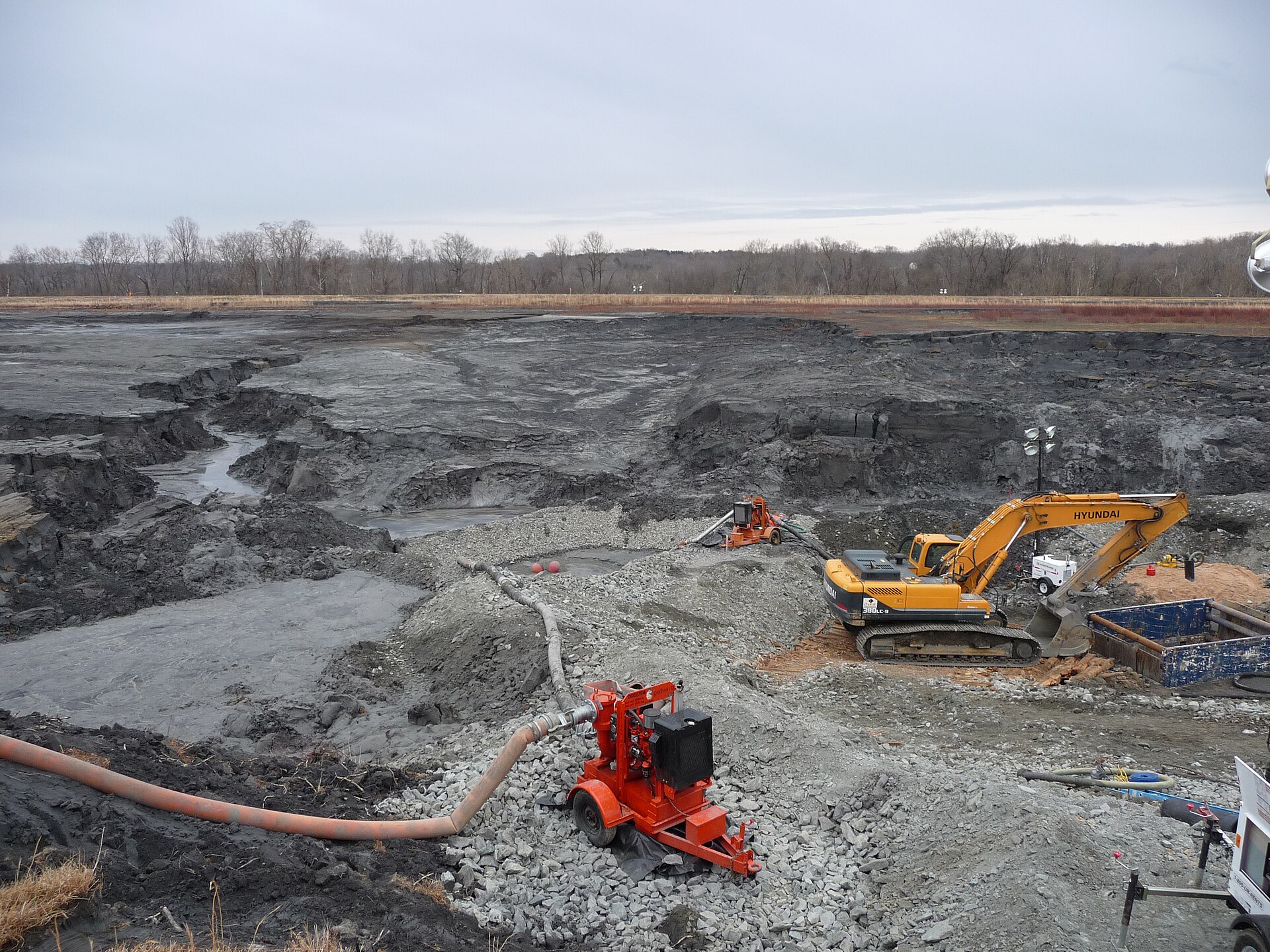
The headline is irresistible: an estimated 11 million tons of rare earth elements (REEs) sitting in U.S. coal ash, worth about $8.4 billion — nearly eight times the country's current raw domestic reserves. The announcement behind it is a five-year research grant.
What is actually proposed
A team led by Worcester Polytechnic Institute, with George Mason, UC San Diego, UMass Amherst and University at Buffalo, wants to copy biosilicification — the way diatoms and sea sponges build intricate silica structures at room temperature using biomolecules and organic scaffolds.
The plan: learn how those organisms move silicon around, adapt the trick to dissolve the glassy, silica-rich particles in coal ash, red mud, tailings and slag, release the REEs locked inside, and turn the leftover silica into products. AI and computational modelling will be used to design the biomolecules.
Billions of dollars in rare earths may be hiding in America's coal ash.
The $8.4B figure is total REE content. The recoverable fraction is unknown and likely much smaller — and no recovery has been demonstrated by this approach.
Where the gaps are
Five years, two phases, no answers before roughly 2031. That is normal for fundamental research — it just is not a supply story.
No data yet. There are no recovery rates, yields or efficiencies. Every benefit is conditional on the approach working.
Biology runs on biological time. Diatoms build silica over hours to days in dilute water. Coal ash is concentrated, heterogeneous and chemically hostile. Scaling a biological mechanism to industrial throughput is the whole problem, not a detail.
Dissolution is only half the job. Even if REEs are released, separating individual elements from a mixed solution is the step that has plagued hydrometallurgy for decades.
Competitors have numbers. Acid leaching and ionic-liquid routes for coal ash already report recovery rates, even if they use harsher chemistry.
The fair verdict
The science question is creative, and the "use the whole material" framing is the right instinct. But this is a research announcement, not a results announcement. Treat the $8.4 billion as the size of the haystack, not the value of the needle.
References and image credits›
- 01ScienceDaily — Billions in rare earth elements may be hiding in America's coal ash
- 02National Science Foundation
Photo: Mike Beauregard, CC BY 2.0 · Photo: Tremaster, public domain