
How Alkaline Thermal Treatment Pulls Hydrogen Out of Unsorted Plastic
A new PNAS study converts mixed PET, PE and PP into >90% pure hydrogen in one reactor — no polymer sorting, and most of the carbon never reaches the gas phase.
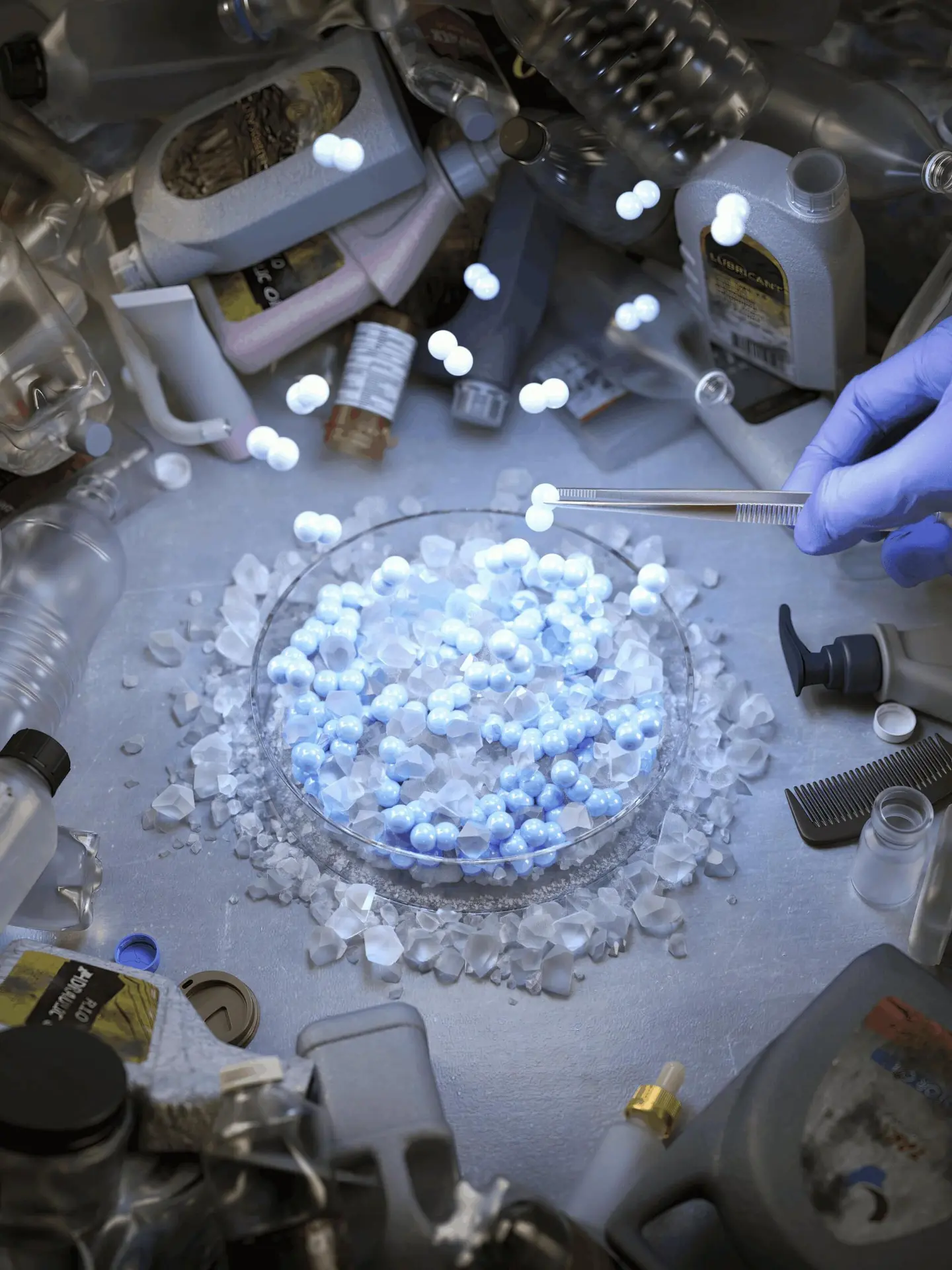
Sorting is the tax every plastics recycling scheme pays. PET, PE and PP behave differently under heat, so conventional routes either sort first or accept a degraded output. A study published in PNAS and summarised on 1 August takes the opposite bet: feed the mixture in whole, and choose chemistry that does not care which polymer it is eating.
The sorting problem this is trying to route around
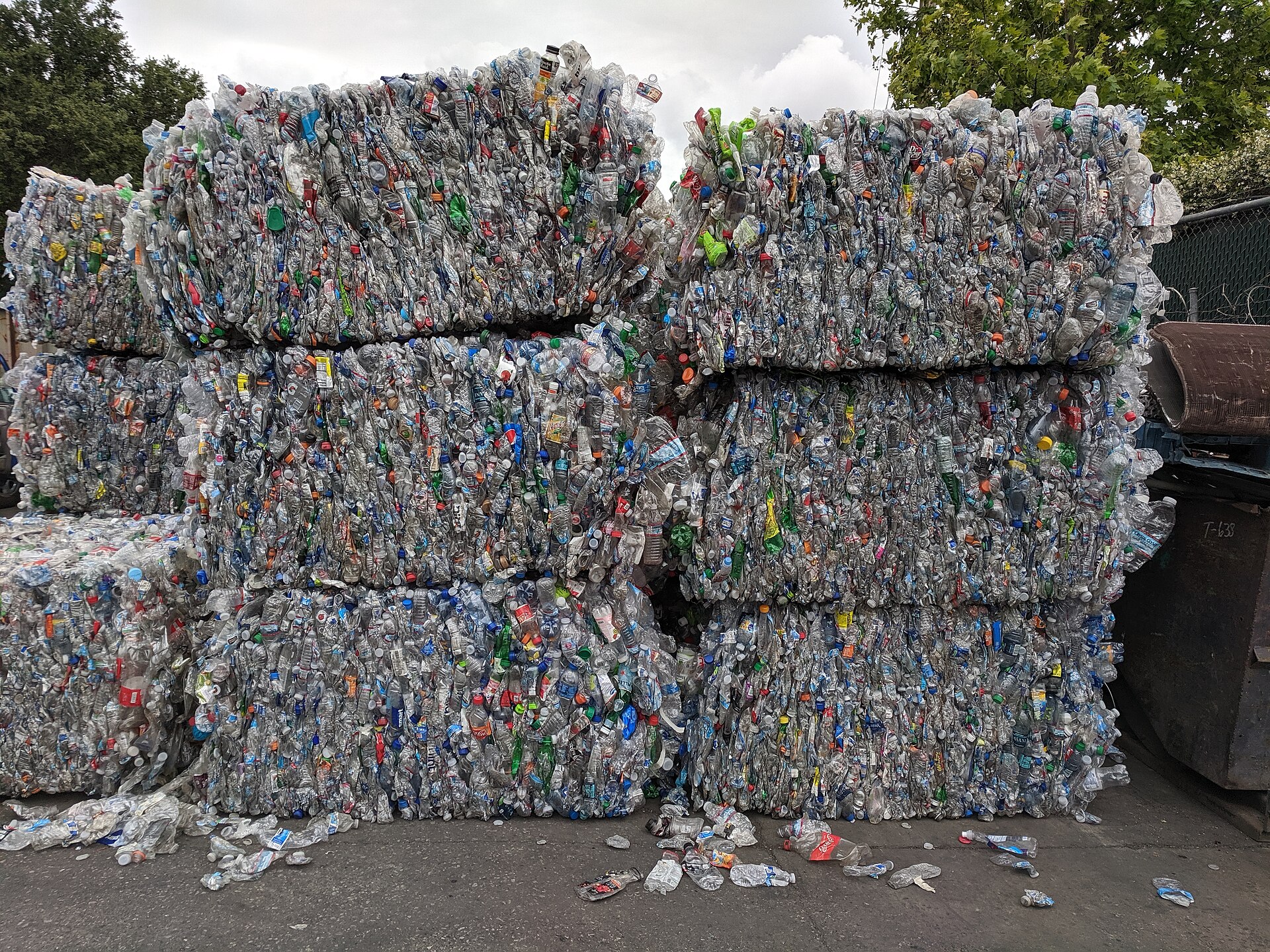
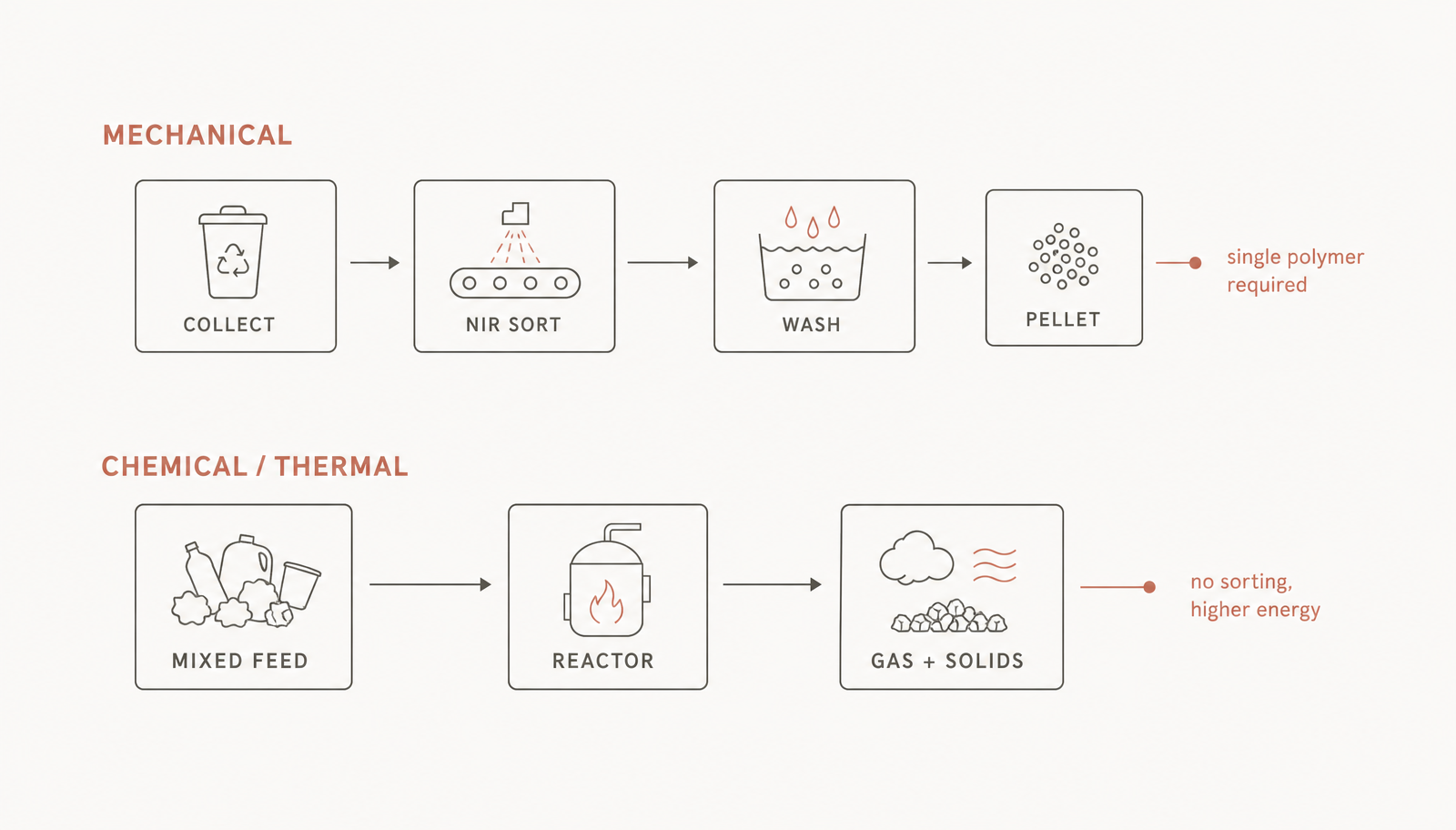
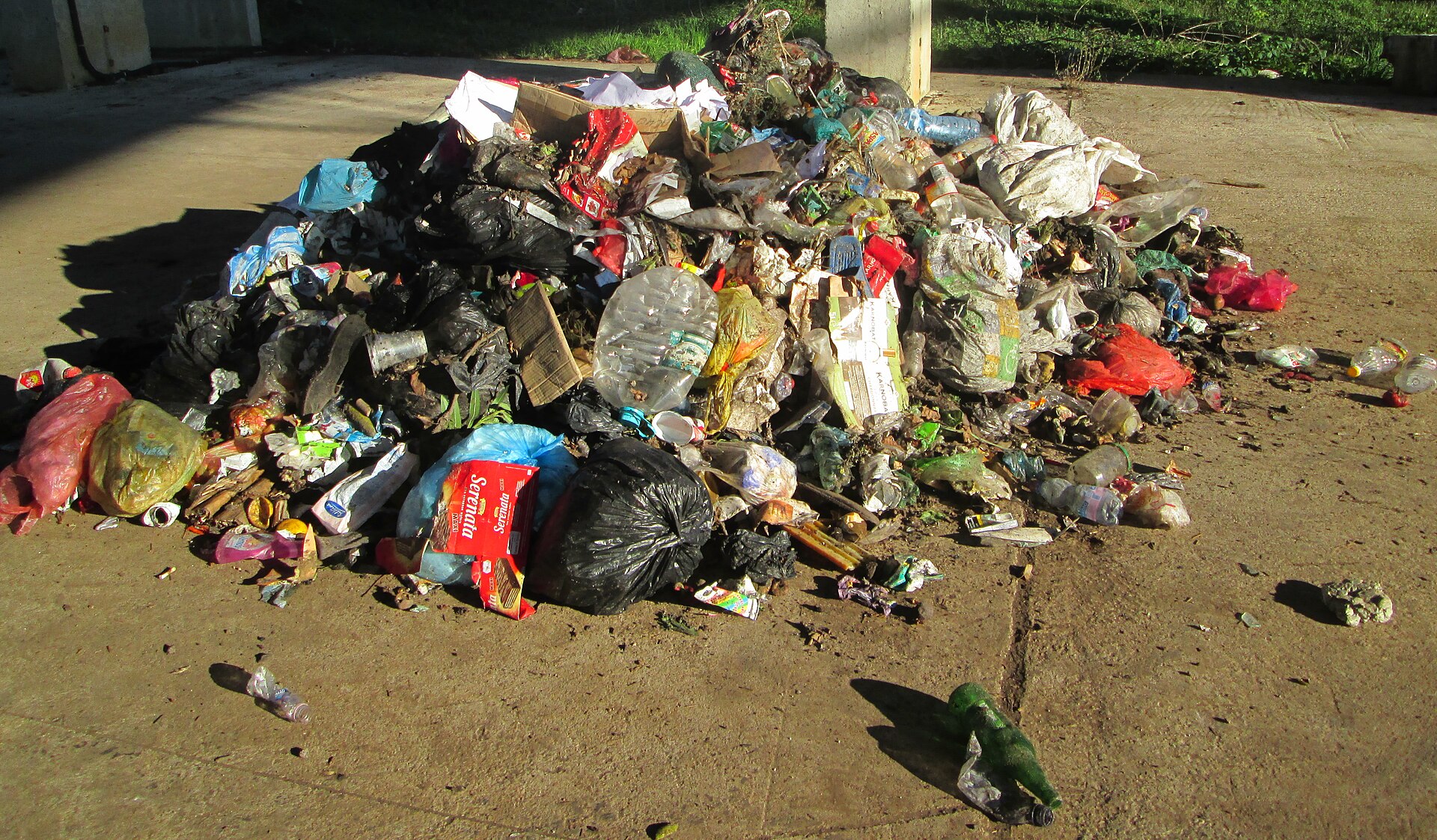
Mechanical recycling needs clean, single-polymer streams. Every step of that — collection, near-infrared sorting, washing, flake sorting — is capital and labour spent before a single gram of value is recovered. Mixed post-consumer film and rigid packaging is exactly where that economics collapses.
Chemical routes such as pyrolysis and gasification tolerate mixtures better, but pay for it in temperature — and in a gas stream that carries most of the feedstock's carbon straight to the atmosphere as CO or CO2.
What alkaline thermal treatment actually does
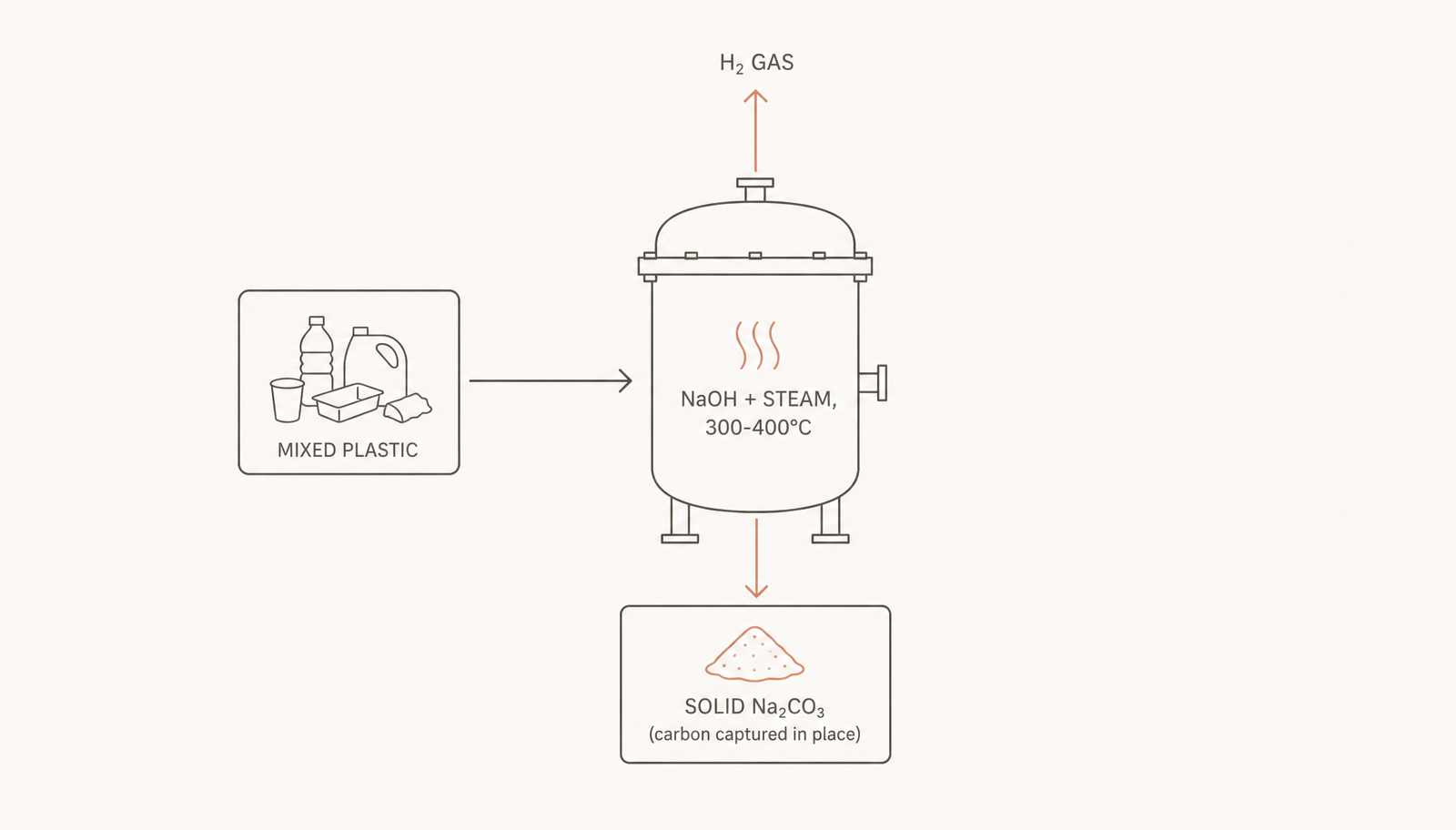
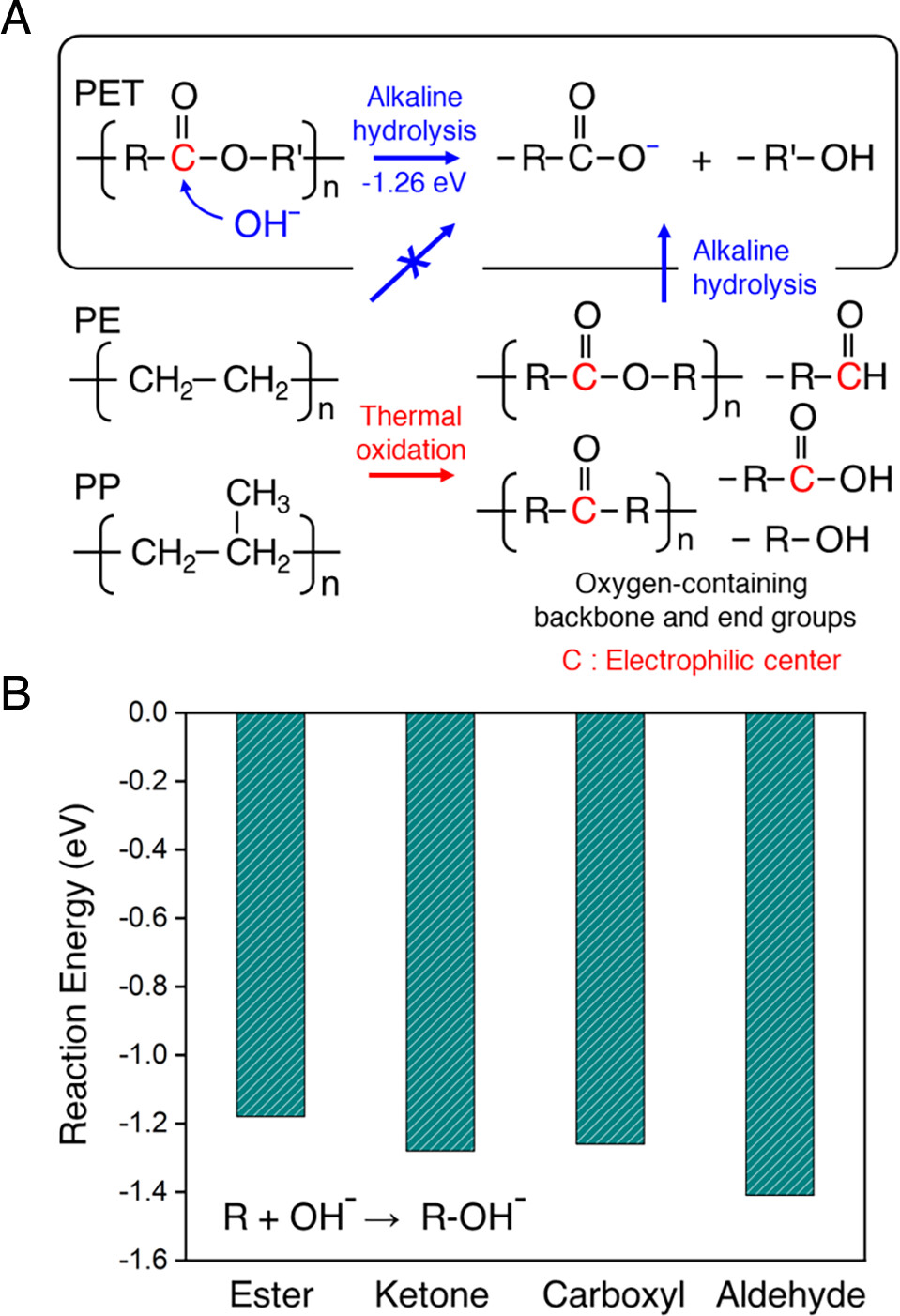
Alkaline thermal treatment (ATT) runs the plastic with sodium hydroxide and steam. Two things happen in the same vessel. The polymer breaks down and reacts with water to release hydrogen, and the carbon released along the way is captured in place by the hydroxide, forming solid carbonate rather than leaving as gas.
That in-situ capture is also a thermodynamic trick: pulling the carbon product out of the reaction as a solid keeps driving the reaction forward, which is a large part of why it runs cooler than steam gasification.
Why PE and PP need a nudge first
PET has oxygen in its backbone and reacts readily. Polyethylene and polypropylene are effectively long chains of carbon and hydrogen with no easy handle for the hydroxide to grab. The researchers add a short thermal-oxidation step that introduces oxygen-containing groups onto those chains — enough to make them reactive under the same conditions as the PET.
What comes out
The output profile is the point. A gasifier gives you syngas and a separation problem. This gives you a relatively clean hydrogen stream and a mineral carbon product that is, by chemistry, already stable.
What this is not, yet
This is a laboratory result. The authors themselves say economic viability is unestablished. The sodium hydroxide is consumed into carbonate and must be regenerated or sold on; real waste carries fillers, dyes and contamination that lab feedstocks do not; and the life-cycle assessment in the paper is explicitly a simplified one.
References and image credits›
- 01ScienceDaily, 29 July 2026 — Turning mixed plastic waste into hydrogen without sorting
- 02PNAS — Alkaline thermal treatment of mixed plastic waste for hydrogen production
Photo: Grendelkhan, CC BY-SA 4.0, via Wikimedia Commons · Diagram: The Waste Stack · Diagram: The Waste Stack · Diagram: The Waste Stack · Photo: 008all, CC BY-SA 4.0, via Wikimedia Commons