
Can a landfill machine run itself?
WM has moved a bulldozer operator out of the cab and is preparing to test an autonomous compactor. Here is what each step in that ladder actually changes on the working face.
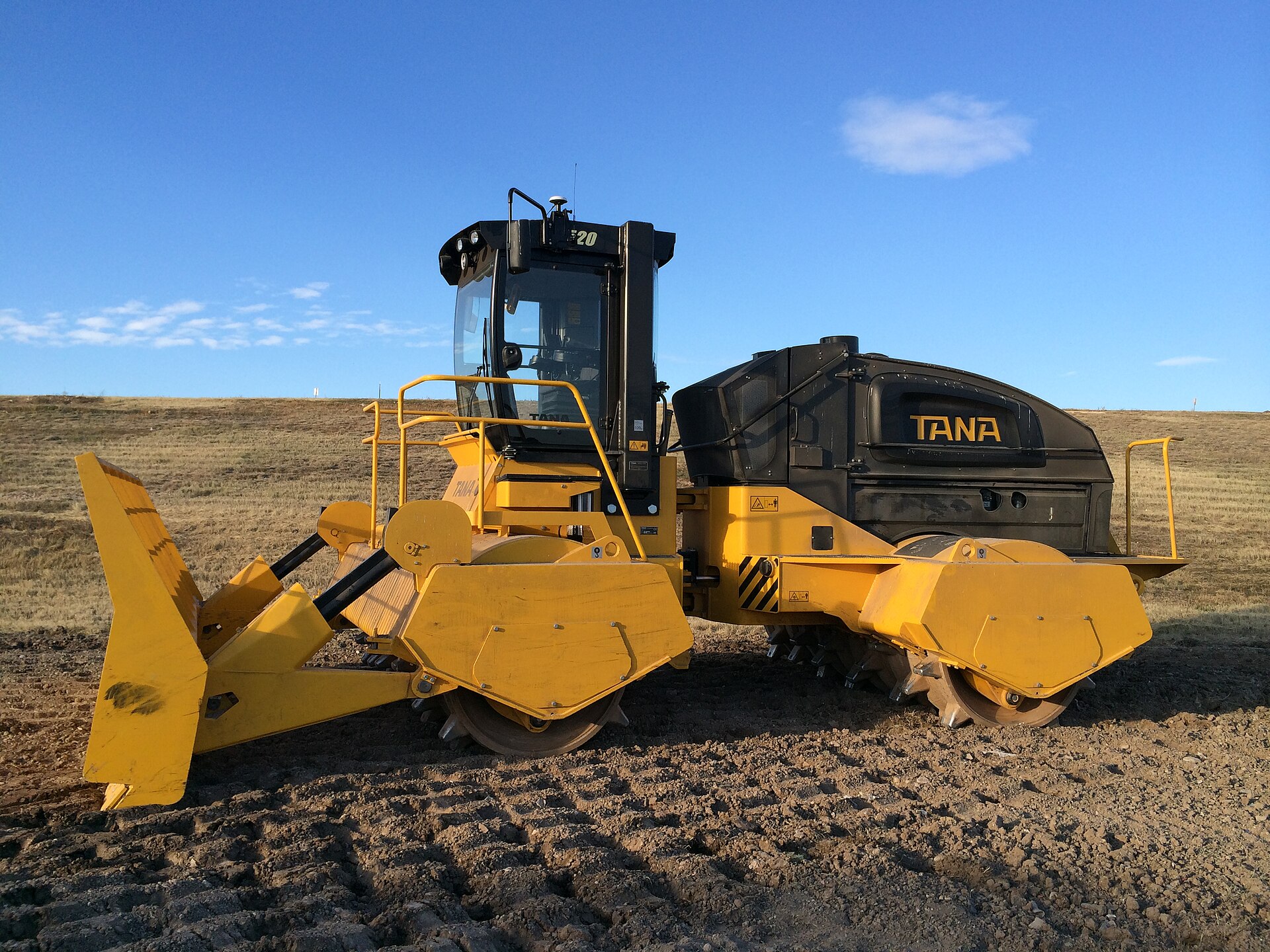
On 3 August, WM said its "Landfill of the Future" programme was advancing from a remote-controlled bulldozer pilot toward testing an autonomous landfill compactor. The headline reads like driverless machines are arriving on the working face. The mechanism is narrower than that, and more interesting.
Where the operator actually sits
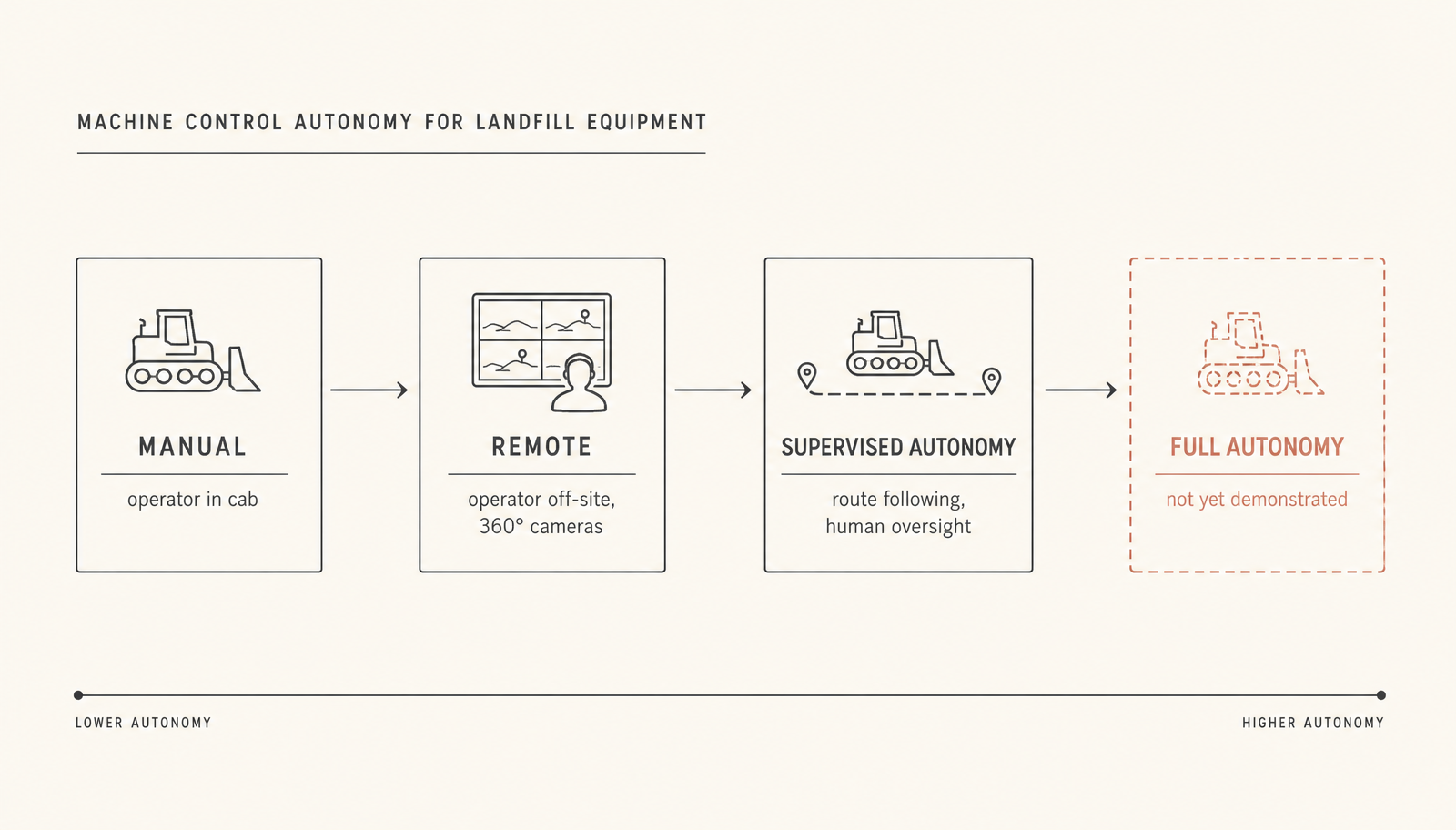
In the pilot, a bulldozer fitted with Cat Command technology was operated from outside the landfill's most hazardous working environment. Cameras gave the operator a 360-degree view while the machine moved and dispersed waste at WM's Marana, Arizona site.
Nothing about the machine's decision-making changed. Every blade lift, every track command still originated with a human — the control link simply got longer. That is the defining property of remote operation: it relocates the person, not the judgement.
What the next step adds
The announced next step is an autonomous compactor. Instead of every movement being manually commanded, onboard sensors, positioning systems and control software would help the machine follow a defined route and compact waste under human oversight.
Read that carefully. Three things are being added: perception (sensors that describe the terrain), localisation (positioning that tells the machine where it is on the cell), and a control loop that turns a planned pass into steering and blade commands. The human stays in the loop as a supervisor rather than a driver.
Why a landfill is a hard place to automate
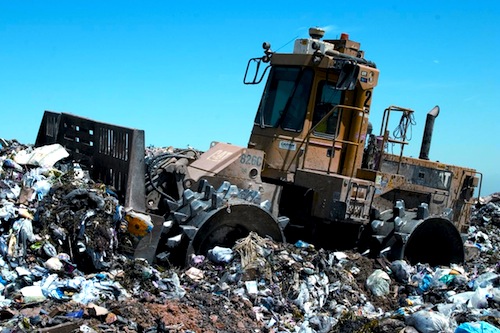
Compaction is a repetitive task on a surface that is never the same twice. Each pass changes the geometry the next pass has to work on. Underneath, there is buried debris no sensor can see, differential settlement, and slopes whose stability shifts with moisture. Add dust that blinds cameras, occasional subsurface fires, and a constant stream of tipping trucks and human spotters sharing the cell.
A route-following controller handles the predictable parts of that well. It handles the exceptions poorly, which is exactly why the human supervisor is specified in the design rather than bolted on.
The connected layer underneath
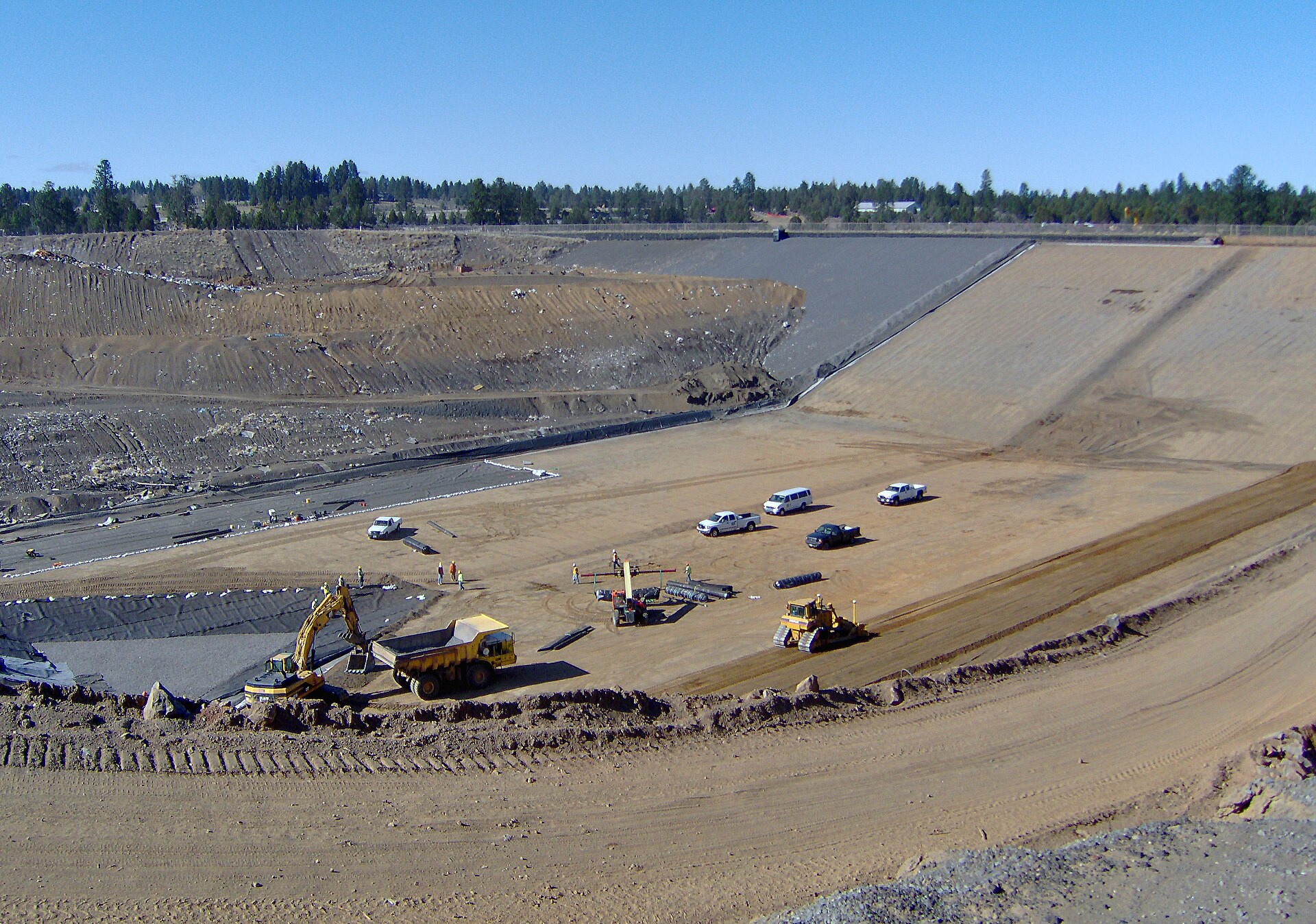
None of this works without instrumentation. WM's connected-landfill approach adds internet-connected sensors that monitor landfill conditions and automate parts of the operating process — the data layer an autonomous machine needs in order to know what state the site is in before it plans a pass.
What has and has not been announced
WM has piloted remote control and is preparing to test autonomy. It has not announced fully autonomous landfill operations, and it has not published test results, compactor specifications or a deployment timeline.
The stated promise is real regardless: operators spending less time near unstable slopes, heavy traffic, dust and fires, with the possibility of one person overseeing multiple machines and building new technical skills. The honest status is that a controlled test is being prepared, not that the working face has been automated.
References and image credits›
- 01WM Media Room — Landfill of the Future advances towards autonomous equipment testing
- 02WM — Connected Landfill technology
Ropable, CC0 · Tequask, CC BY-SA 4.0