
The triangle with a number does not mean "put me in the blue bin"
The chasing arrows around a 1, 2 or 5 identify the resin. They say nothing about whether your hauler collects it, whether the sorter can capture it, or whether anyone will buy it.
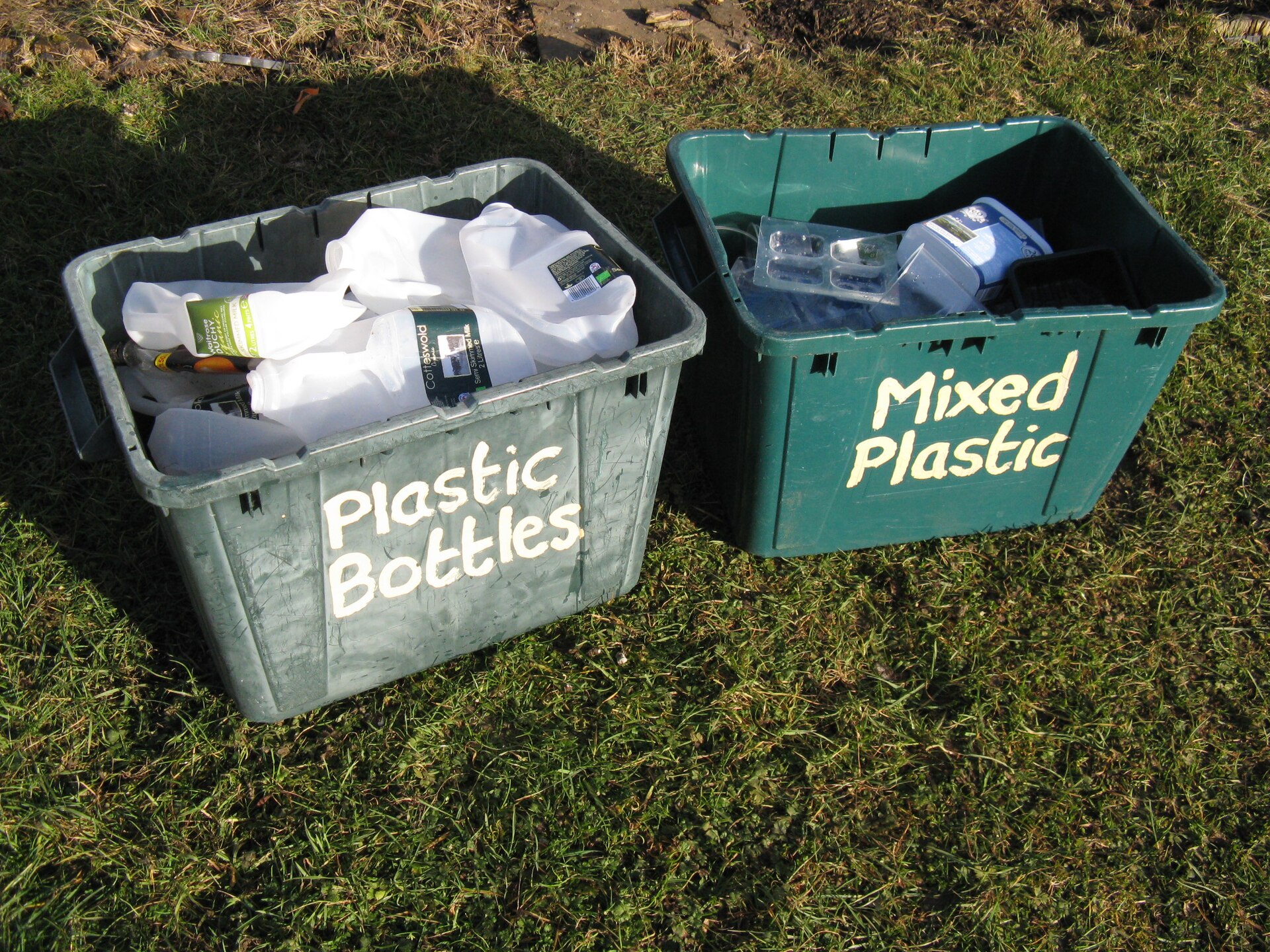
A plastic package stamped with chasing arrows and a number - 1, 2, 5 - is recyclable through household curbside collection.
The number is a resin-identification code. It tells you what polymer the item is made from. EPA is explicit that the symbol does not necessarily mean the item is collected for recycling in your community.
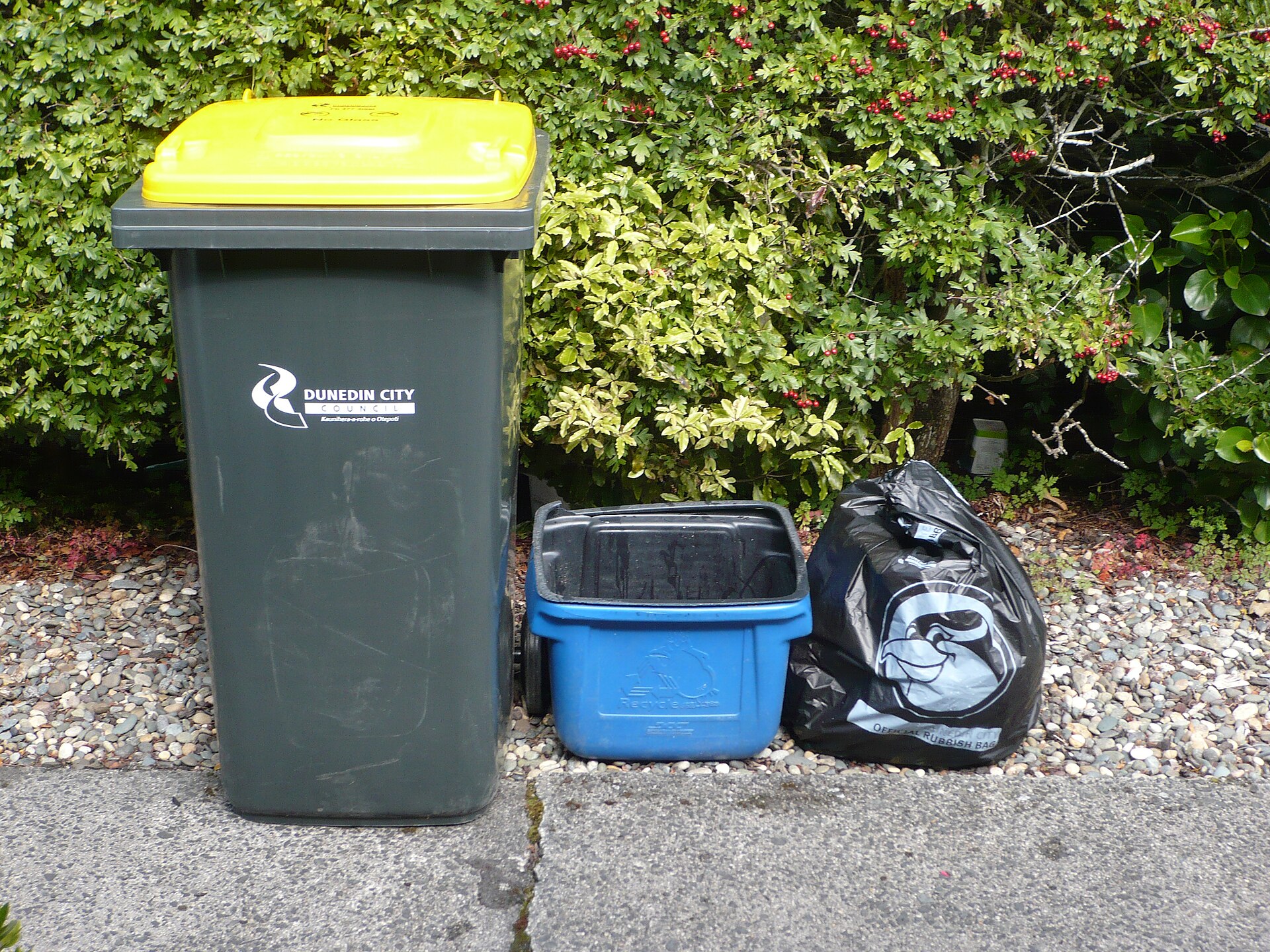
Three different questions wearing one symbol
Whether an item gets recycled depends on three independent conditions, and the triangle answers only the first.
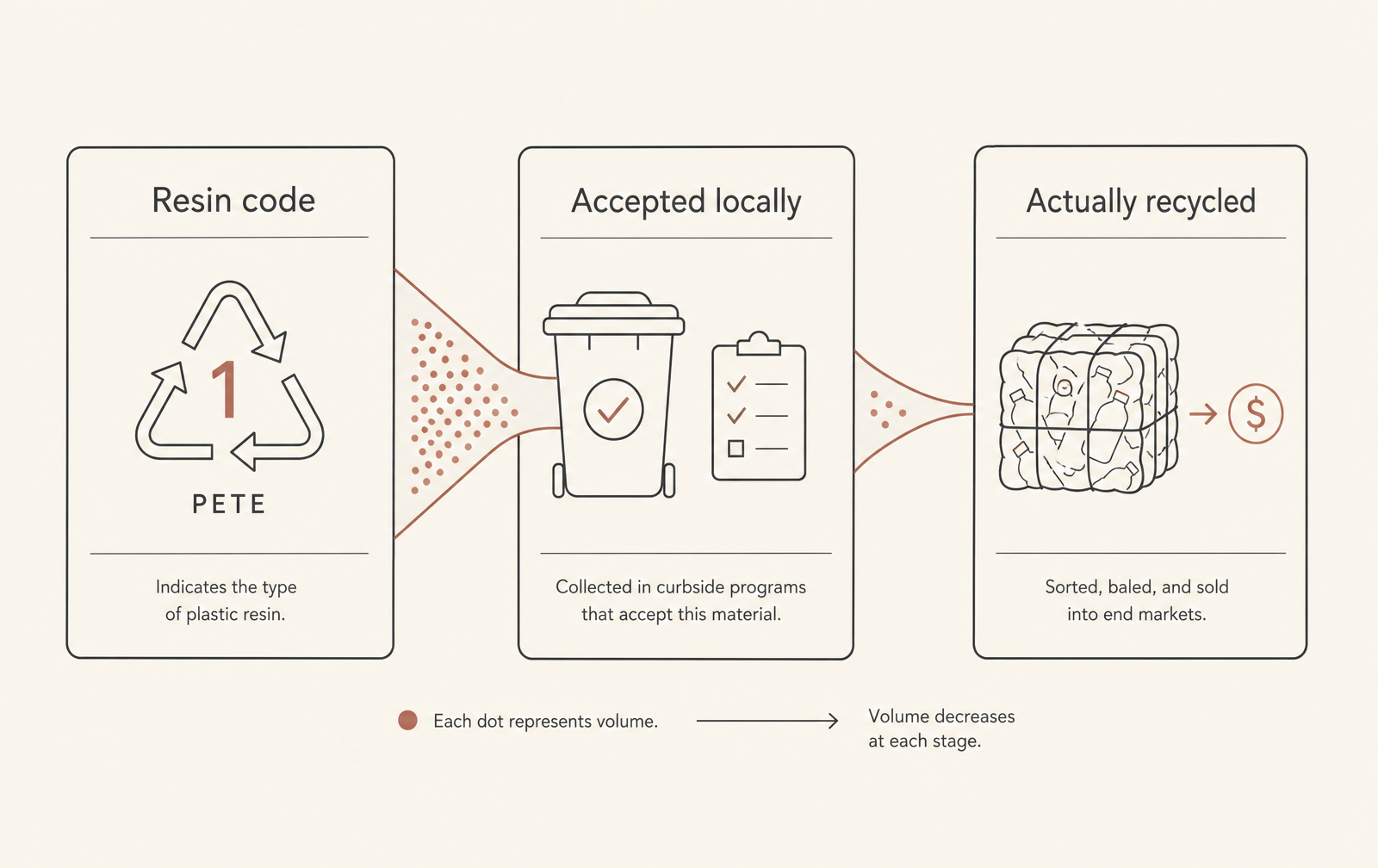
What resin is it. What does your local program collect. And is there a sorter and an end market that will take that shape, at that contamination level, at today's price.
A number 5 tub and a number 5 film are the same polymer and completely different fates. Shape, size and rigidity decide whether the sorting line captures the item at all.
Why the myth is so durable
The FTC's position is that consumers routinely read resin codes and chasing arrows as a guarantee of recyclability, even where an item's shape, contamination or the absence of a local market keeps it out of curbside collection.
The symbol looks like an instruction. It was designed as a materials identifier for reprocessors. That mismatch has been doing quiet damage for decades.
If I put it in the recycling bin, at worst it gets pulled out later. No harm done.
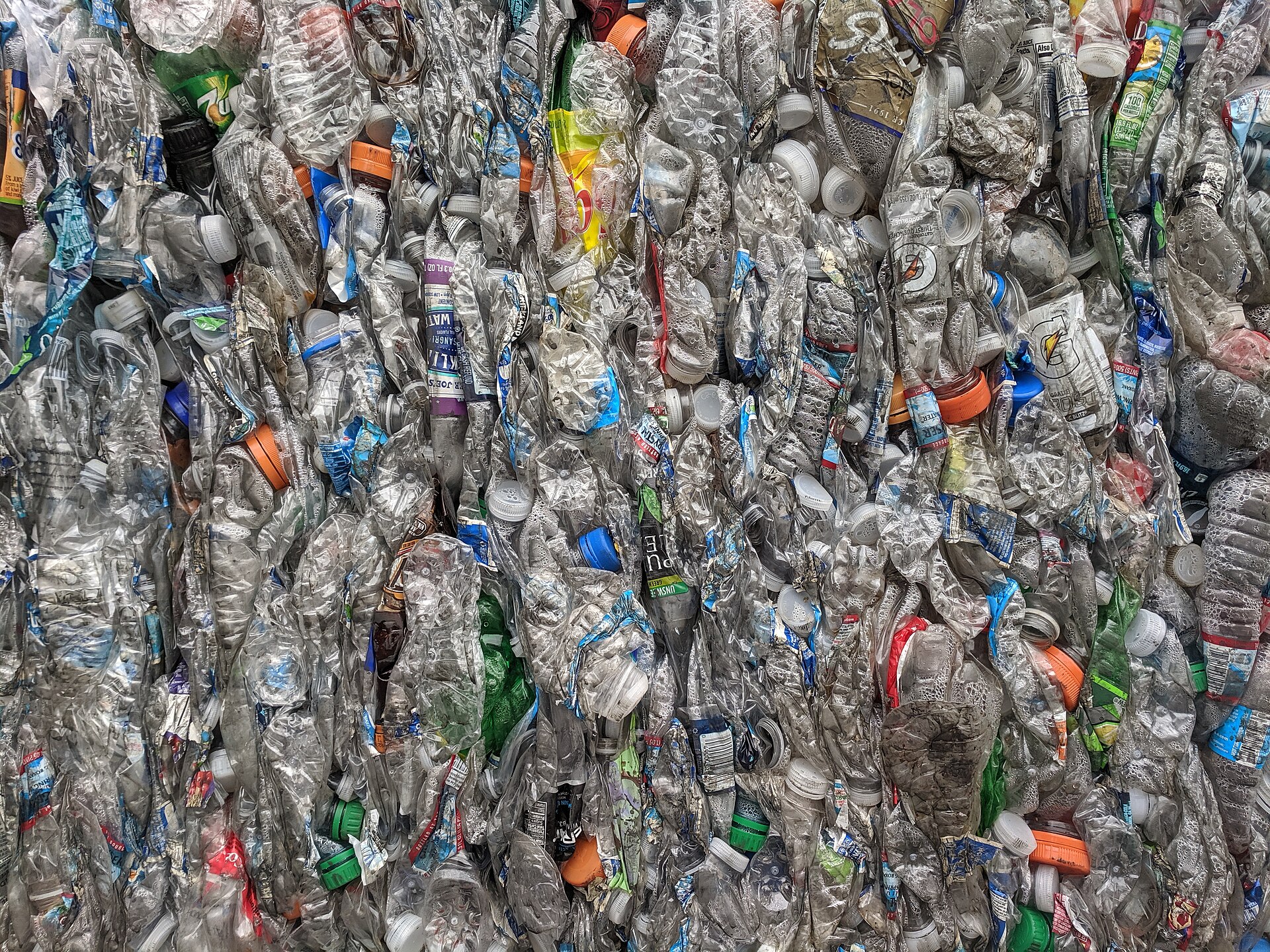
Wish-cycling is not free. Non-target items jam sorting equipment, contaminate bales, lower the price of the material that was correctly sorted, and can push a whole load to disposal.
What to do instead
Read the accepted-materials list for your municipality or hauler, not the package. That list is the only authority on what belongs in your bin this year.
Rinse or scrape food residue off accepted containers. Use store drop-off or take-back channels where local instructions require it - film and flexible packaging almost always fall in this category.
The FTC's Green Guides push in the same direction: clear, specific instructions instead of vague labelling that leaves consumers guessing.
The honest caveat
There is no universal curbside rule, and there is not going to be one. Acceptance varies with local contracts, sorting equipment and end markets, and all three change. A correct resin code is not a promise that your community can economically recycle that item today.
That is not a reason to disengage. It is a reason to treat the local list as the source of truth and the triangle as what it is: a note to the reprocessor, not to you.
Worth arguing about
What is the most confusing recycling label or item where you live - and what does your local program actually tell residents to do with it?
References and image credits›
- 01U.S. EPA — How Do I Recycle Common Recyclables?
- 02U.S. Federal Trade Commission — Recyclable Claims and the Green Guides
Photo: Lcmortensen, CC BY-SA 3.0, via Wikimedia Commons · Diagram: The Waste Stack · Photo: Grendelkhan, CC BY-SA 4.0, via Wikimedia Commons