
Casablanca's $1.5B waste-to-energy bet: circular solution or combustion lock-in?
A 33.5-year exclusive treatment concession, three combustion lines and roughly 1 TWh a year. The contracts are signed. The financing, the emissions baseline and the recycling question are not.
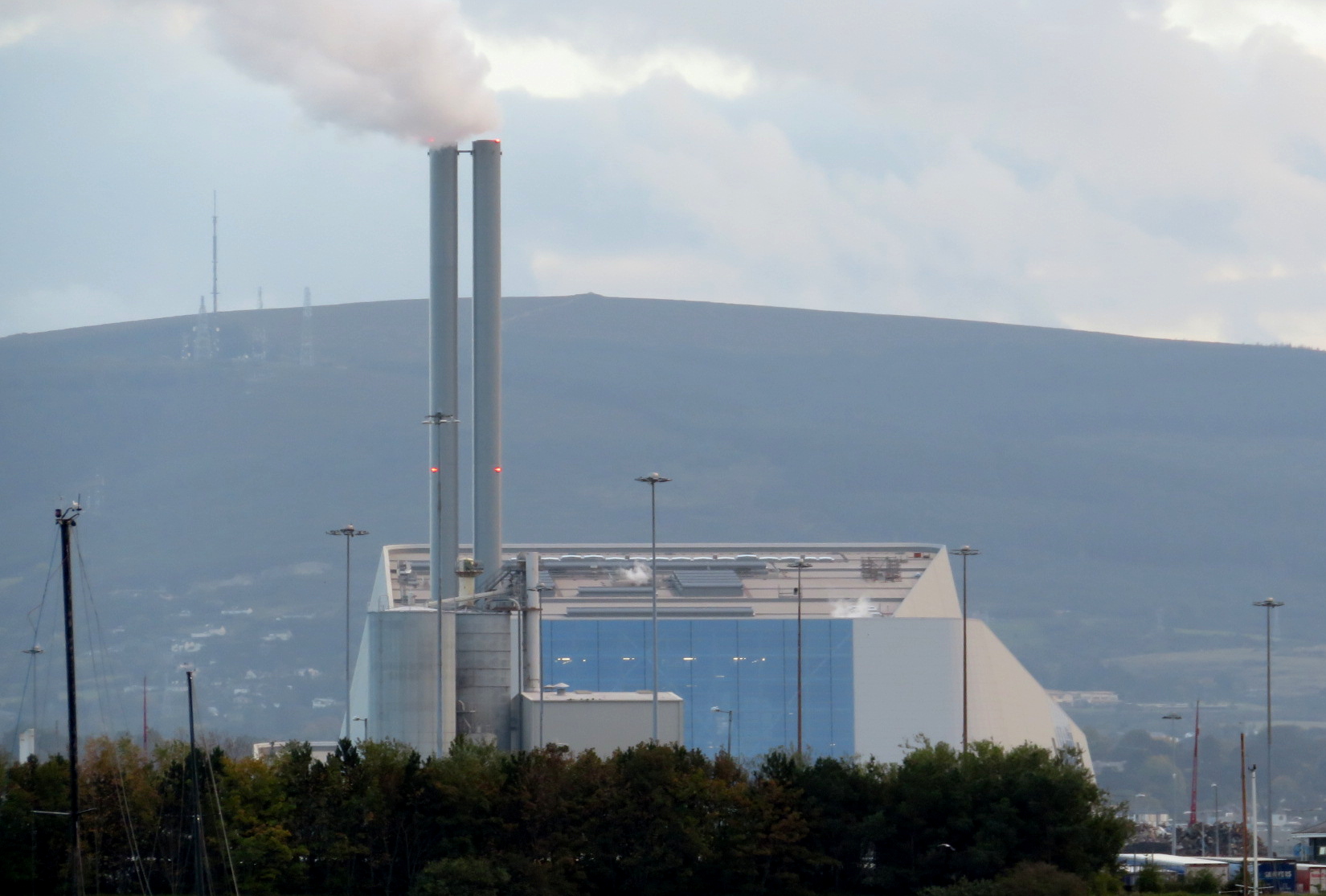
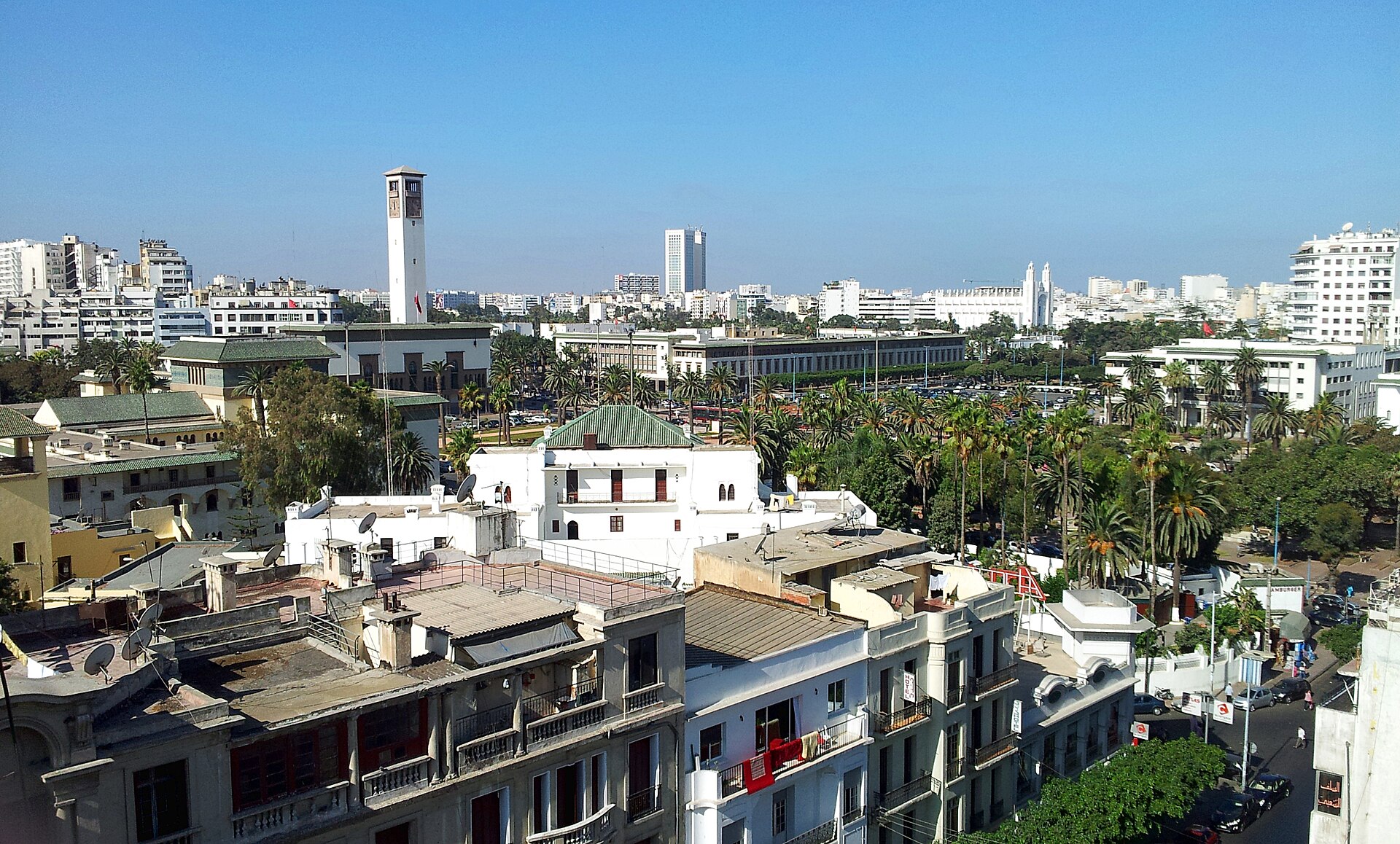
On 4 August, Kanadevia Inova, Nareva and Itochu announced a concession and electricity off-take agreements for an integrated waste facility in Casablanca, tied to the Mediouna landfill. Reuters put the figure at $1.5 billion.
The scale is real. So is the distance between a signed concession and an operating plant.
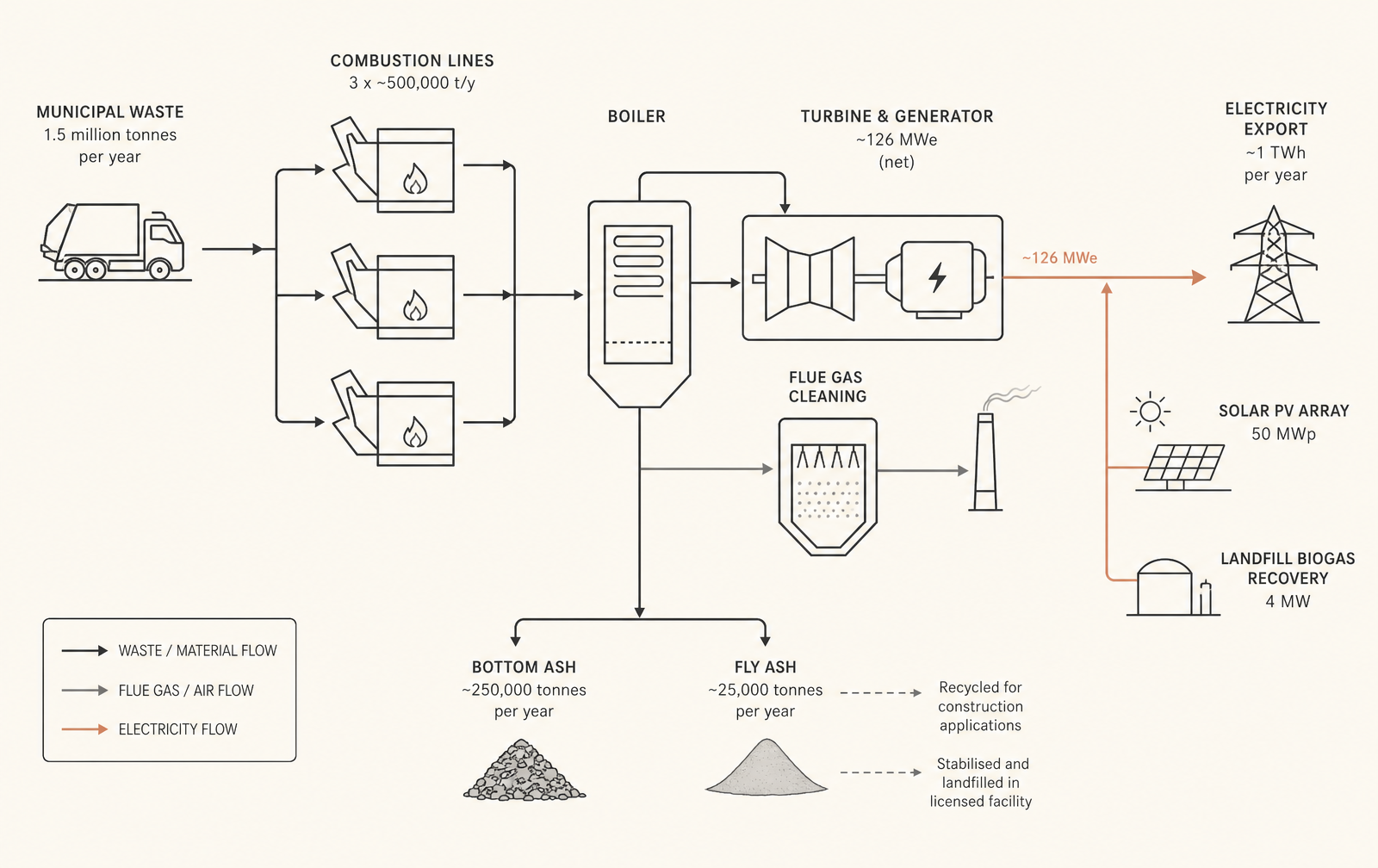
What the consortium says it will build
When the developer and the newswire publish different capacity numbers on day one, treat every downstream figure - output, emissions, tariff - as provisional.
Kanadevia Inova specifies three combustion lines, roughly 126 MWe of baseload generation, 50 MWp of solar PV, 4 MW of landfill-biogas recovery and about 1 TWh of annual electricity output. Off-take agreements are with SRM Casablanca-Settat and ONEE.
Note the first discrepancy: Reuters reported the waste-to-energy plant at around 115 MW. The two public figures for the same asset do not match, and neither source explains the difference.
What is genuinely strong here
This is not a bare incinerator. It bundles landfill management, methane recovery, combustion, solar and contracted electricity off-take into one concession, which is a more honest structure than a standalone burner bolted onto an unmanaged dump.
Mediouna is the real target. A landfill of that size emits methane continuously and imposes odour, leachate and informal-sector burdens on the surrounding area. Formal treatment capacity plus gas capture addresses a problem that exists today.
The developer also says flue-gas cleaning will meet the EU Industrial Emissions Directive and Best Available Techniques standards, with possible future carbon-capture integration. Committing publicly to IED-equivalent limits in a non-EU market is a meaningful standard to be held to.
Where the pitch runs ahead of the evidence
Reuters reports construction depends on debt and equity being fully secured by Q4 2026. That single condition governs everything else, and the public reporting does not give the financing split, the lenders, the guarantees, the PPA tariff or its duration.
The consortium's claim that emissions reductions could equal roughly 20% of Switzerland's annual emissions is presented without a public baseline or methodology. Waste-to-energy climate claims are almost entirely a function of the counterfactual you choose: uncontrolled landfill methane, captured landfill gas, or increased recycling. Change the baseline and the number moves by more than an order of magnitude.
The recycling question nobody answered
Ask for the ash plan. Roughly a fifth to a quarter of input mass leaves as bottom ash, plus a few percent as air-pollution-control residue that is classified as hazardous in most jurisdictions.
A 33.5-year exclusive treatment commitment does two things at once. It gives lenders the feedstock certainty that makes the project bankable. It also creates a three-decade institutional interest in keeping combustion lines full.
The public announcement does not show waste-composition assumptions, separate-collection targets, an organics strategy, an ash-management plan, or a quantified comparison against recycling and landfill-gas alternatives. Those are exactly the documents that would settle whether this displaces landfill or displaces future recycling.
The verdict
If financed and operated as designed, the project diverts a major waste stream from Mediouna, recovers energy for a large share of the city, and formalises capacity that currently does not exist. That is a real improvement over the status quo.
But a signed concession is not a financed, operating facility. The open questions are whether the climate benefit survives scrutiny of waste composition, recycling displacement, combustion emissions, ash handling and methane accounting - and why two public sources report different power capacities for the same plant.
Worth arguing about
What evidence would convince you that waste-to-energy is a bridge to better waste management, rather than a 33-year commitment to burn valuable materials?
References and image credits›
- 01Reuters — Morocco to build $1.5 billion waste-to-energy plant in Casablanca
- 02Kanadevia Inova — Integrated Waste to Energy project in Casablanca
Photo: Maksim Massalitin, CC BY-SA 2.0, via Wikimedia Commons · Diagram: The Waste Stack, from published project figures · Photo: Norbert Nagel, CC BY-SA 3.0, via Wikimedia Commons